マギー・チュウ
Maggie CHU
1975年香港生まれ。ニュー・サウス・ウェールズ大学で学士号を取得し香港で建築家として活動。その後2021年にRMIT美術学校で美術学士号を取得。
ドローイングやコラージュ、彫刻などさまざまな手法を組み合わせ、場所に基づくアイデンティティを多角的に探究している。素材は多岐にわたり、ファウンドイメージ、テキスト、収集した工芸品などがある。チュウの作品は想像力とアーカイブとして現れる事実が混在しており、街並みというマクロなレンズから深遠な個人的体験まで、スケールの知覚を探求し、場所の内と間に横たわる歴史の語りを探求している。
Born in Hong Kong, 1975. Maggie CHU graduated BArch at University of New South Wales and practiced as Architect in Hong Kong before she completed BA Fine Arts at RMIT / School of Art in 2021.
Her art practice explores the multifaceted aspects of place identities with combination of various methods including drawing, collage, and sculptures. Her source materials range from found images, texts and collected artefacts. Her artworks intermingle imagination and facts represented in the form of archive. She explores the perception of scale, from the macro lens of the cityscape to the profound personal experiences, excavating narratives of history lying within and between places.
- 日本語
- ENGLISH
アーティスト・イン・レジデンス プログラム2024 “SPINNING SCAPES” 参加
アーティストになろうと思ったきっかけや、どのようにしてアーティストとなったのか、学んできたことや影響を受けた物事などを踏まえて教えてください。
私にとって「都市」こそが一番の教師です。都市は、空間がいかに私たちの動きや記憶、関係性を形づくるのかを教えてくれます。そうした気づきから、厳格な建築設計から離れ、イメージや物体、物語を手がかりとした直感的な作品制作へと向かい、身近なスケールで立ち上がる、柔らかく儚い建築としてのインスタレーションを構想するようになりました。
制作プロセスにおいては、多岐にわたる分野の文献を読み解き、観察やフィールドワーク、記録などを通じて、好奇心に導かれるまま、直感的にリサーチを進めています。そこからさらに、ドローイングやコラージュ、小型の彫刻へと展開し、場所と人とを結びつける表現へと発展させています。そして、印刷物や身の回りのものを集め、自らの創造するイメージと重ね合わせ、都市の風景や個人的な記憶に至るまで、事実と想像の境界を曖昧にするアーカイブを制作しています。
建築を学ぶ中で、構造や素材、空間のスケール感といった知識を培ってきました。一方で、「不確かさ」を受け容れることを教えてくれたのはアートでした。これまで建築や生け花などから影響を受けてきましたが、とりわけ生け花は、空間の関係性や、素材と空間とのあいだに生まれる繊細な対話への意識をより深めてくれています。
今回のアーティスト・イン・レジデンス プログラム2024 “SPINNING SCAPES”に応募したきっかけを教えてください。
移動やナラティブ、知覚によって絶えず書き換えられていくものとして風景を捉える「SPINNING SCAPES」というテーマに共感したことが、応募のきっかけでした。私自身、制作において都市スケールの構造と個人的な記憶の断片とのあいだを行き来することが多く 、「回る/紡がれる」風景というコンセプトは自身の探求とも重なると感じました。
また、森に囲まれた広大な実験的ギャラリーを有するACACの環境や、地域の方々との制作・交流に重きを置くプログラムにも惹かれました。このような恵まれた空間で、青森の気候や土地にまつわる語りに学びながら空間的な構想を試みることは、慣れ親しんだ場所から距離を取り、異なる地平から「場所」というものを見つめ直すきっかけになると考えました。
AIRで行ったリサーチ・作品制作・成果発表において新たに発見したことや挑戦したことなどあれば教えてください。
青森の季節の移り変わりや気候に加えて、故郷を離れて暮らすという体験そのものが、自分の制作に深く影響を与えました。最初の作品構想で巣を作らない鳥であるカッコウに着目していましたが、AIRでの体験から、かえって日常の些細な事柄や「家」の持つ意味へ意識が向かうようになりました。日々移ろう光や、ゆっくりと変化していく森の時間に触れる中で、風景とは温度や匂い、音を通じて「読む」ことのできるものだと考えるようになりました。
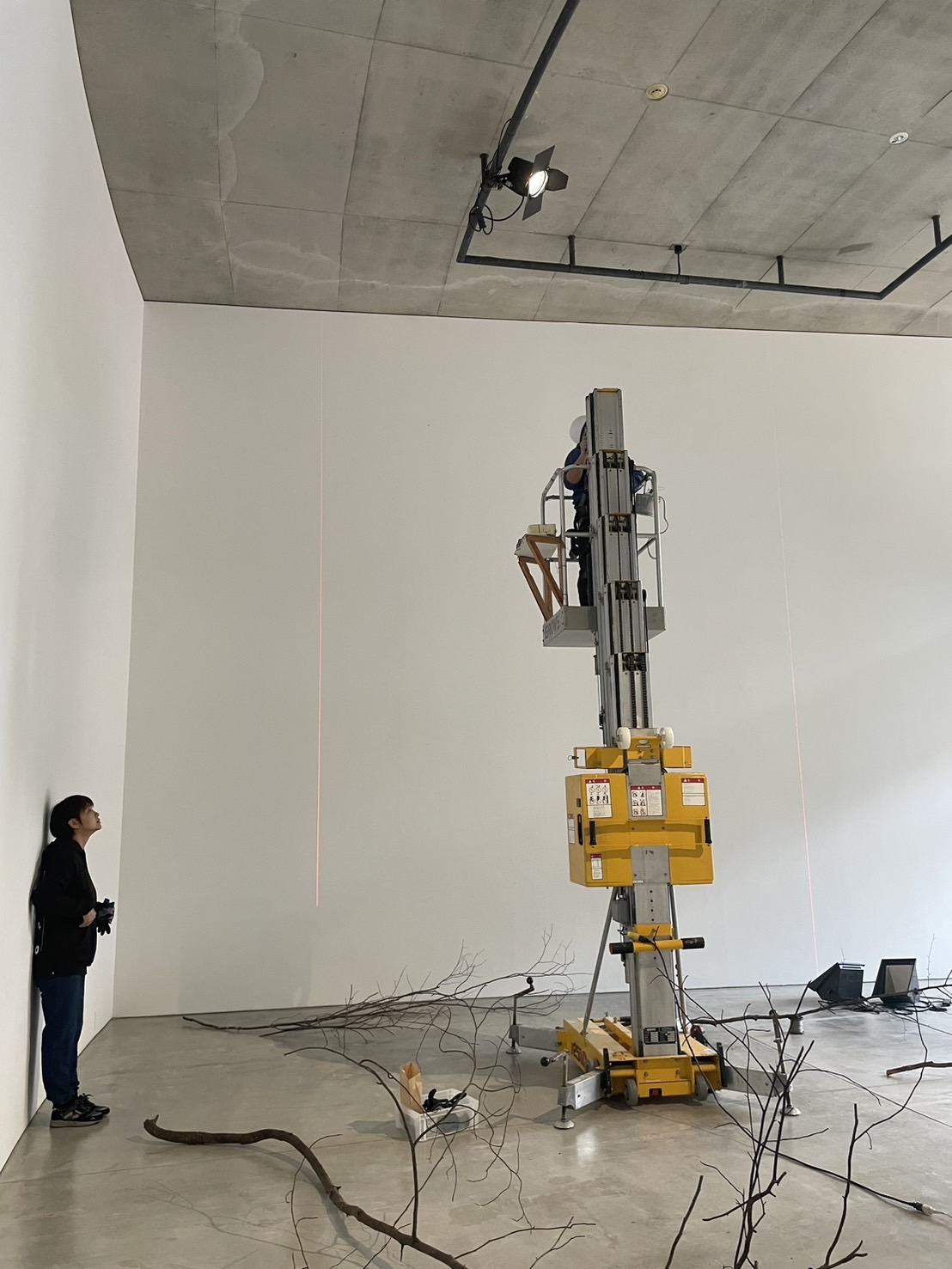
苦労したのは、新しい空間と時間のスケールに合わせて制作活動のリズムを調整することでした。ACACの展示棟は普段扱う空間よりもはるかに大きく、レジデンスプログラムのスケジュールに合わせて制作とリサーチ、公開発表の準備とを両立させる必要がありました。そのため、事前に計画を立てすぎる癖を手放し、現場での試行錯誤を重ねながら作品を更新していきました。
4人のアーティスト全員がACACに揃ったのは、たった1日だけでした。帰郷後はSNSなどを通じて他のアーティストの展示の様子を知ったと思いますが、この体験をどのように受け止めましたか?
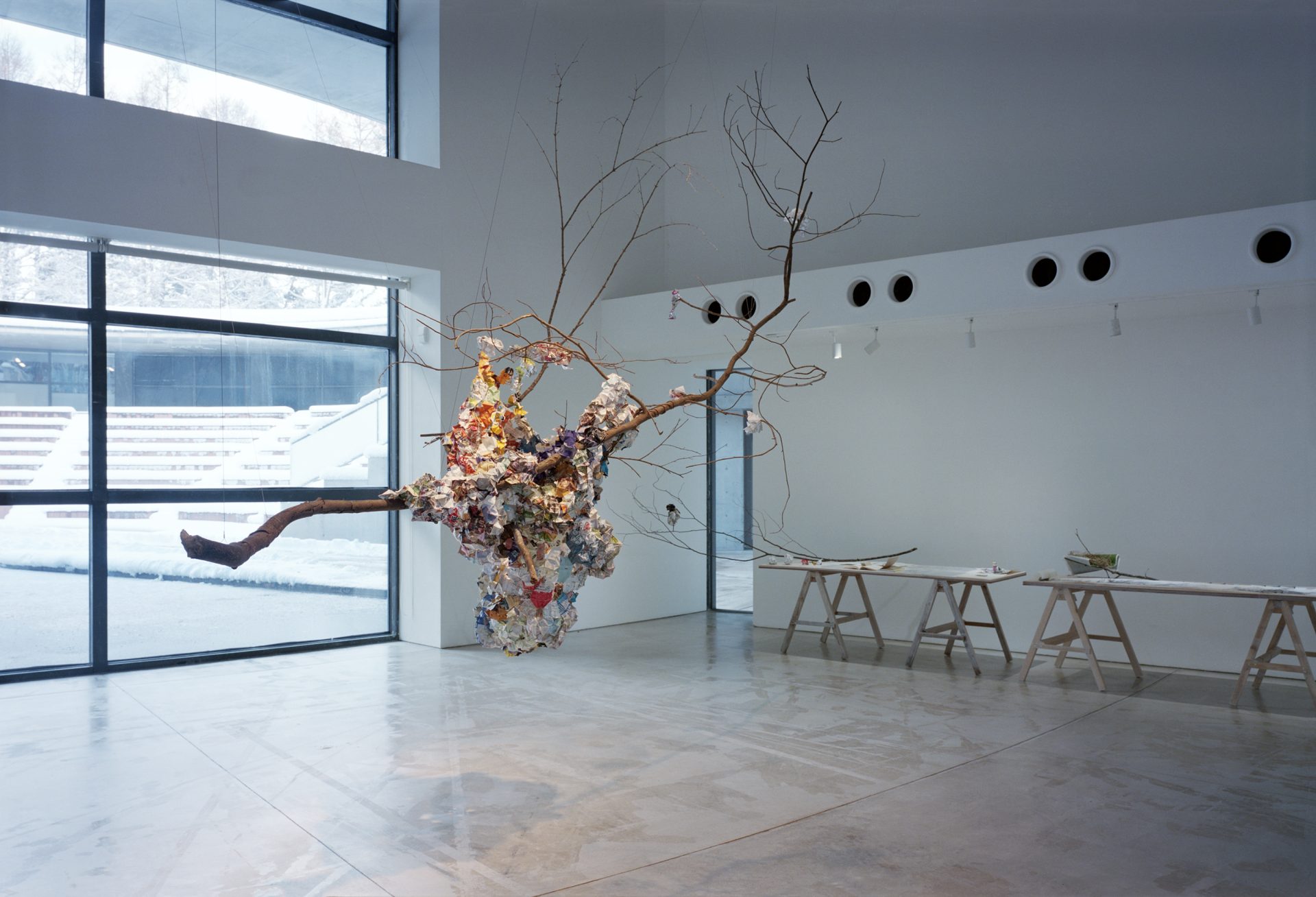
参加作家4人全員がACACにそろったのはつかの間でしたが、同じ場と風景を共有した濃密なひとときでした。滞在スケジュールはそれぞれ異なり、とりわけ私は他の3人より一足早く青森を離れたため、その後はACACで制作・展示した作品を通じて、お互いの交流が続いていきました。青森滞在中に集めた印刷物や日常の痕跡を取り込んだ私の作品は、今回のレジデンスの記録そのものとなり、ある意味で、私たちのいっときの出会いの余韻をかすかに残す、空っぽの鳥の巣のような存在になったのだと思います。
他のアーティストやゲスト審査員、地域の人々といった他者との協働ややりとり、この土地について印象にのこっていることなどはありますか。
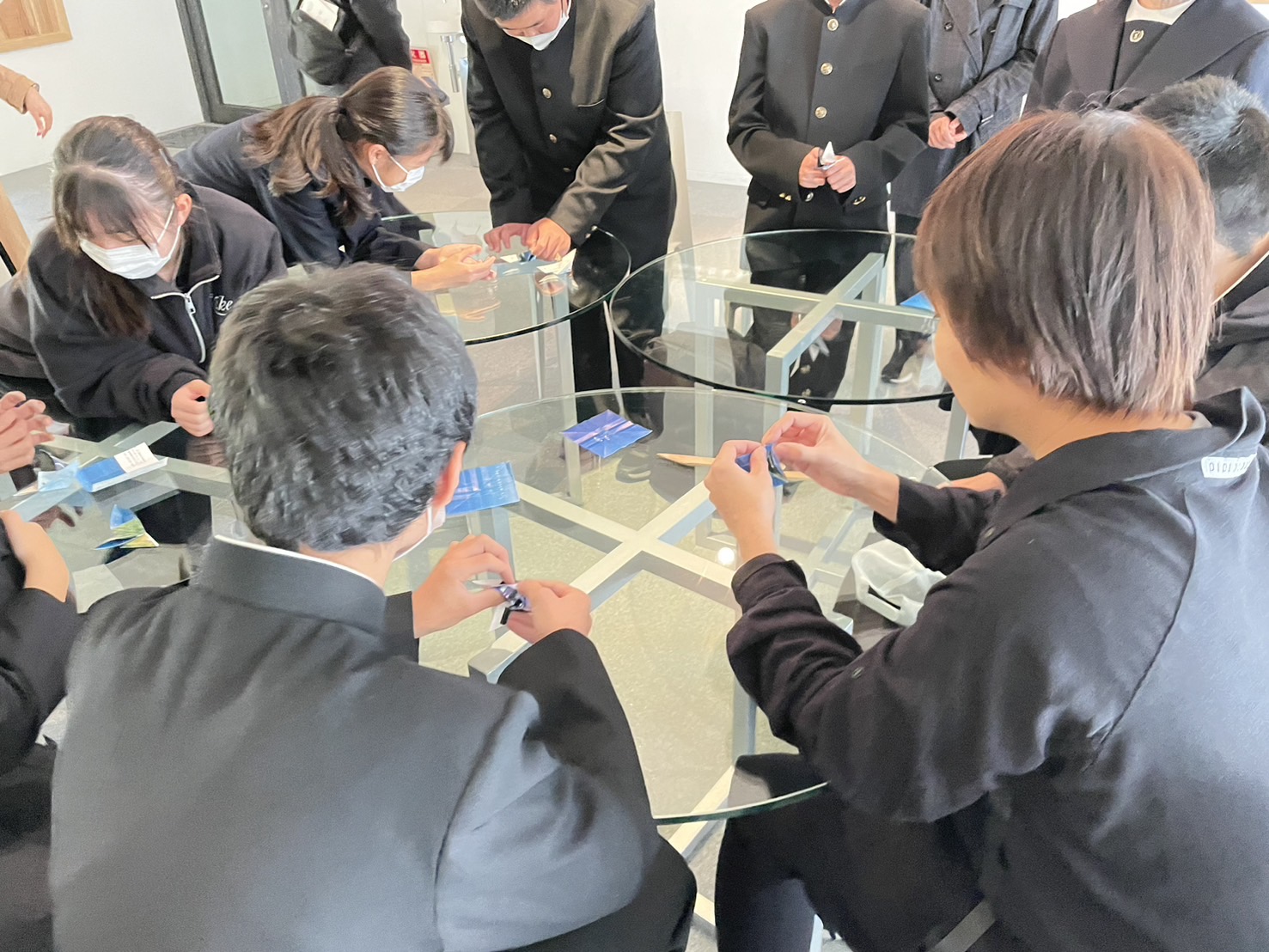
スタッフや来場者、地域の方々との対話は強く印象に残っています。皆さんが青森の気候や土地の歴史、街中の経路といった、土地に根差した具体的な手がかりを通して作品に向き合ってくださったことで、芸術作品とは様々な知を結ぶ小さな架け橋になり得るのだと改めて実感しました。同時に、青森と香港での個人的な物語が静かに重なり合っていく感覚がありました。学生たちが作品に加えてほしいと送ってくれた手書きの手紙や折り紙には、特に心を打たれました。言葉の違いを超えて、彼らの素朴で真摯な身振りが、私たちの「巣」を本当の意味で共有されたものにしてくれました。
自然の中にありながらもれっきとした人工物であるACACの建築も、敷地を歩いたり、下へ降りたり、屋内外を行き来したりする身体的経験として記憶に焼きついています。周辺の森や日々表情を変えていく空とともに、この場所は展示と日常、自然のあいだをとめどなく循環するループとなり、帰郷した今もなお、その体験をかみしめています。
今回の経験は今後あなたの活動にどのような影響をもたらすと思いますか。また、これから予定している活動などあれば教えてください。
今回のレジデンスで、都市の記録や家族、慣習、自然環境を、同じ織物を織りなす糸として捉えながら、異なるスケールや時間の層を横断して制作することへの解像度が高まりました。今後は、視覚的あるいは地図的な表現を超えて、時間や季節、風景の感覚的な質感により注目していきたいと考えています。
ACACでの経験は、生きることの本質や、世界各地から集まったアーティストたちの多様な実践について、じっくりと思いを馳せる機会となり、自身を大きく変えるような貴重な体験でした。今後もリサーチを軸とした実践を一層深めながら、場所・人・時間をつなぐ方法として、自然素材や風土、儀礼、伝統工芸を追求していきたいです。
英日翻訳:ペンギン翻訳(加藤久美子、杉山千枝)
Participated in Artist in Residence Program 2024 “SPINNING SCAPES”
What inspired you to become an artist, and how did you embark on this path? Please share your journey, including what you have learned and what has influenced you.
The city is my greatest teacher, revealing how spaces shape our movements, memories, and relationships. This insight led me from rigid architectural design to intuitive work with images, objects, and stories—reimagining installations as soft, ephemeral architecture on intimate scales.
My practice is an intuitive research process, guided by curiosity through observation, interdisciplinary reading, fieldwork, and documentation. It evolved through drawing, collage, and small sculptures that forge connections between places and people. I collect printed matter and everyday artifacts, blending them with my own images to create archives that blur fact and imagination—from urban landscapes to personal memories.
Architectural training gave me command of structure, material, and scale, yet art taught me to embrace uncertainty. My influences include architecture and ikebana. Ikebana deepens my attention to spatial relationships and the subtle dialogue between materials and space.
What motivated you to apply for the Artist in Residence Program 2024 “SPINNING SCAPES”?
The theme “SPINNING SCAPES” resonated because it speaks about landscapes as continuously rewritten through movement, narratives, and perception. My practice moves between city-scale structures and personal fragments of memory, so the idea of “spinning” landscapes felt closely aligned with my explorations.
I was drawn to ACAC’s environment—a large experimental gallery surrounded by forests, with a programme that emphasizes production and exchange with local communities. The possibility to test spatial ideas in such a generous space, while learning from Aomori’s climate and narratives, motivated me to step away from familiar places and look back at “place” from another horizon.
Were there any new discoveries or challenges you encountered during your research, artwork creation, or final presentation at the AIR program?
The seasonal shifts and climate of Aomori, along with living simply away from home, deeply influenced my work. These elements drew my attention to everyday details and the meaning of home—even as my initial proposal focused on the cuckoo, a bird that does not build nests. The changing light and slow transitions in the forest prompted me to rethink how landscapes can be “read” through temperature, smell, and sound.
A practical challenge was adjusting my working rhythm to a new scale of space and time. The ACAC exhibition hall is much larger than spaces I usually work with, and the residency schedule required constant negotiation between making, researching, and preparing for public presentation. I had to unlearn my habit of over-planning and let the work evolve through on-site experiments, tests, and small failures.
There was only one day when all four artists were present at ACAC together. It was just this single day of encounter, and after returning home you likely knew about the other artists’ exhibitions through social media and other channels. How did you perceive this experience?
The single day when all four artists were together at ACAC felt like a brief but intense constellation—a shared moment in a temporary home and landscape. Our stays were staggered, so our connection continued mainly through the artworks created and exhibited at ACAC, especially after I left Aomori earlier than the other three. The work I made became a record of my residency, incorporating printed matter and everyday traces collected from my time in Aomori. In a way, it became an empty nest—a subtle, lingering trace of our fleeting encounter.
Did any interactions with other artists, guest judges, or local community members leave a strong impression on you? What are your lasting impressions of this place?
Conversations with staff, audiences, and community members left a strong impression because they approached the work through concrete references—weather, local histories, and specific routes through the city. These grounded perspectives reminded me that artworks can act as small bridges between different kinds of knowledge, allowing personal stories from Aomori and Hong Kong to quietly overlap. The handwritten letters and folded origami that students sent back for me to add to the work felt especially moving—despite language differences, their simple, sincere gestures made the shared “nest” feel genuinely communal.
The architecture of ACAC, nestled in the landscape yet clearly man-made, stayed with me as a physical experience of walking, descending, and moving between indoor and outdoor thresholds. Together with the surrounding forest and changing sky, the place became a continuous loop between exhibition, daily life, and nature—something I am still digesting after returning home.
How do you think this experience will influence your future practice? Also, if you have any upcoming projects, please share them with us.
This residency deepened my appreciation for working across scales and temporalities—seeing city archives, family, rituals, and natural environments as threads woven into the same fabric. In future projects, I aim to pay closer attention to time, seasonality, and the sensory textures of landscape, moving beyond visual or cartographic representation.
The experience at ACAC was profoundly transformative, offering me quiet reflection on the essentials of living and the diverse practices of artists from around the world. I look forward to further developing my research-based practice, exploring natural materials, nature, rituals, and traditional craft as ways to connect with place, people, and time.