ベアトリス・ディディエ
Béatrice DIDIER
1971年生まれ。ブリュッセル王立音楽院で学び、様々なパフォーミング・アーツのプロジェクトに携わる。2005年に出会ったモニカ・クリングラーとボリス・ニエズロニーにより、ディディエの主要な表現媒体となるパフォーマンス・アートに導かれる。これまで、ソロまたはグループでの活動を通じて、ヨーロッパ各地、メキシコ、中国、インド、日本、ミャンマー、バングラデシュのギャラリー/美術館、プラットフォーム、フェスティバル、レジデンスでパフォーマンス上演、指導を行ってきた。2014年以降、リンツのThe Atelierhaus Salzamtや成都のUPON festivalで、自身のパフォーマンスアート作品に関する展示を行ったことが、アクションやパフォーマンスと直接結びついたインスタレーション制作を始めるきっかけとなった。ディディエは、ベルギーを拠点とするパフォーマンスアートのプラットフォーム、Ricochetsのメンバー、ACTUSのキュレーター/共同設立者でもある。
Born in 1971, Béatrice DIDIER studied at the Conservatoire Royal de Bruxelles (Royal Theatre School of Brussels), teaching and working on several projects in performing arts. The encounter with Monica KLINGLER and then Boris NIESLONY in 2005 brought Béatrice Didier to Performance Art, which then became her principal medium of artistic creation. By practicing in solo or in group, Didier has performed in galleries/museums or in the context of platforms, festivals, residencies throughout Europe as well as in Mexico, China, India, Japan, Myanmar,… Since 2014, Béatrice Didier has exhibited her work in Performance Art at Atelier Salzamt in Linz, 10/12 in Brussels, Kunstpavillon in Burgbrohl or in the context of UPON festival in Chengdu. These projects brought her to create installations directly connected with her actions/ performances. Béatrice Didier is also member of Ricochets in Belgium and was the curator / co-organiser of the platform ACTUS.
- 日本語
- ENGLISH
アーティスト・イン・レジデンス プログラム2024 “SPINNING SCAPES”参加。
アーティストになろうと思ったきっかけや、どのようにしてアーティストとなったのか、学んできたことや影響を受けた物事などを踏まえて教えてください。
物心ついた頃から、食事が終わるやいなや自分の部屋に戻り、本を読んだり、音楽を聴くことを楽しみにしていました。誕生日プレゼントにお願いしたレコードのひとつが、ヴィヴァルディの《四季》で、その頃の私は、春から秋にかけて庭の桜の木のもとへ通い、そこに住んでいると信じていた妖精たちに会いに行っては話しかけていました。
12歳の時に朗読と演劇のレッスンを受けたいと思うようになり、ほどなくして、30歳から50歳ほど歳の離れた大人たちに交じって、アマチュア劇団に参加するようになりました。16歳の時に学校で観た《ザ・ワンダラーズ(The Wanderers)》という舞台作品がとても印象的で、その後数人の仲間とともに、ピエール・ヴァンクとベッティーナ・ヴィンデルシュミットによる、グロトフスキ・メソッドを基にした研修プログラムに参加するという貴重な機会にも恵まれました。
学校では、フランス語・フランス文学の先生が、2年間で読むべき本のリストを配りながら、「本は自分で読めるから、授業では映画や美術、舞台作品を一緒に分析しましょう」と言っていて、その先生の授業で映画や現代演劇、ピカソの《ゲルニカ》といった作品に出会いました。そういえば、父方の祖母は80歳で絵を描き始めていて、当時私は十代にさしかかるぐらいだったので、はっきりとは覚えていないのですが……もしかすると、そういったことからも影響を受けていたのかもしれません。決して芸術が身近な家庭ではなかったのですが、私は一貫して演劇の道を進みました。ブリュッセル王立音楽院では、ある親友を通じてポール・ヴァレリー、ステファヌ・マラルメ、サン=ジョン・ペルスといった詩人や、ジャコメッティ、マティス、レジェ、ジェルメーヌ・リシエといった美術家たちを知りました。彼に連れられて訪れたアンティーブのピカソ美術館で、ニコラ・ド・スタールの遺作《コンサート》の前で目隠しを取った瞬間のこと、あるいはヴァレリーの一節を叫びながら夜の海辺を走ったこと――そうした体験はいまも鮮やかに記憶に残っています。音楽院を卒業した後は、作家のヴェロニカ・マバルディ、画家のジャン・ヴェルシュヴァルとの出会いがあり、それが毎晩ひとつの絵画がその場で生み出される、マグダラのマリアをめぐる舞台作品へとつながりました。その後、ルーヴァン=ラ=ヌーヴのヒューマニティーズ・シアターでの教育実践を通じて、工業施設などの非演劇空間の可能性を探究するようになりました。さらに、リコシェ・カンパニーでの活動、インドでの舞踊やカルナティック音楽との邂逅、ボリス・ニエズロニーやモニカ・クリングラーとの出会いをきっかけとしたパフォーマンス・アートへと、表現の場は広がっていきました。振り返れば、私を芸術へと導いてくれたのは、こうした数えきれないほどの「出会い」でした。それぞれの出会いが、私を一つの表現形式から別の表現へと導き、新しい表現の地平へと開かれる窓となり、物事の見方や創作のあり方に新たな視点をもたらしてくれました。
今回のAIRに応募したきっかけを教えてください。
2023年に武谷大介さんから「R5 遺構 I 以降 since then I from now 震災 ―パンデミック― これから 遺構へ」の企画にお声がけいただき来日したのですが、その体験は自分にとって衝撃的なものでした。自分の拠りどころが揺さぶられ、五感がかき乱され、空間や時間との関係そのものを改めて問い直されるようでした。その時、私の中に「風景」という概念、そして人間と風景との関係性が立ち現れてきたのです。それは、自分が生きてきた文化圏の言葉では定義しきれない、存在の知覚に関わるような、なんとも言い表しがたい感覚でした。この国にもう一度戻りたい――それがいつになるのか、どのように、またなぜなのかは分かりませんでしたが、その強い思いが確かに芽生えていました。その後、歩くことをテーマに制作を進めていた時期に、「SPINNING SCAPES」の公募を目にし、タイトル、自身のプロジェクトの方向性、森という場所、その環境、秋から冬へと移り変わる季節、そしてビジュアルアーティストたちとの出会い――そのすべてが、自分にとって必然のように思え、今回の応募につながりました。
AIRで行ったリサーチ・作品制作・成果発表において新たに発見したことや挑戦したことなどあれば教えてください。
まず、驚くほど豊かな自然との出会いです。あの環境はどのようなアーティストにとっても、大地に身を置く身体のあり方をあらためて知覚させる、唯一無二の体験をもたらしてくれると思います。私自身、芸術とは瞑想のような営みでありうることを再認識し、何よりも偉大な創造者である自然そのものに、より深く耳を澄ませることへと立ち返ることができました。その過程で、形式としての言語であると同時に、「行為の中で生成されていくもの」としての詩という概念も改めて立ち上がってきました。私は詩人ではありませんが、毎日俳句を書くことで、外の空間と内なる空間の観察から生まれる「書く」という営みが、日々の実践として根づいていきました。
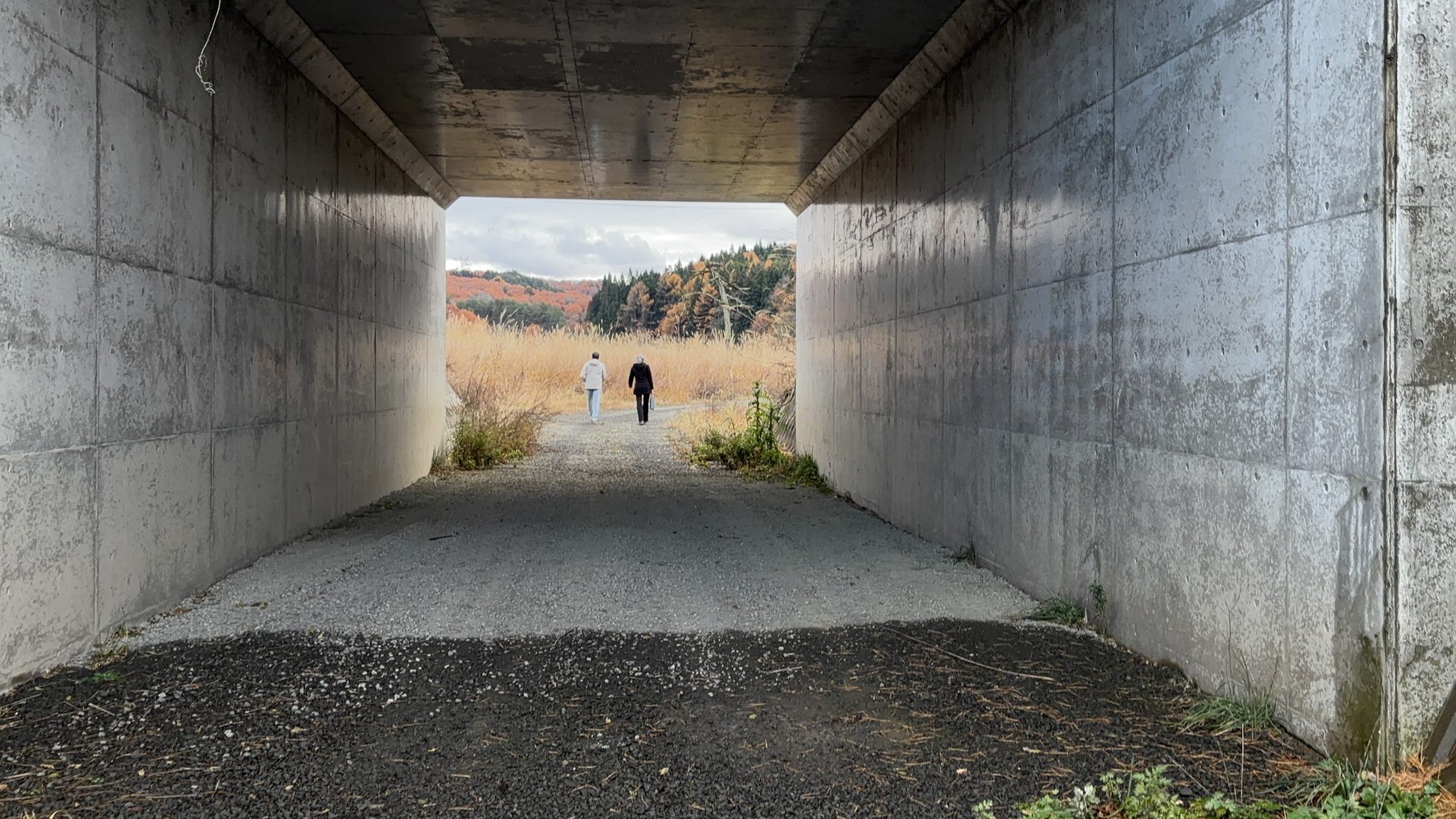
また、地域の方々との散策も驚きの連続でした。当初は何も話さず静かに歩くことを提案していたのですが、実際には皆さんが話したい、共有したいという思いを強く持っていたのです。言葉の面で難しい挑戦でもありましたが(通訳として同行してくださった方々には本当に感謝しています)、その対話を通じて、街や自然のこと、それぞれの物語や歴史、文化など、多層的な情報をたくさん受け取ることができました。残念ながら、それらすべてを作品に取り込むことはできませんでしたが(その場合、ドキュメンタリー作品になっていたかもしれません)、私自身にとって、生そのものの様々な側面を問い直す機会となりました。
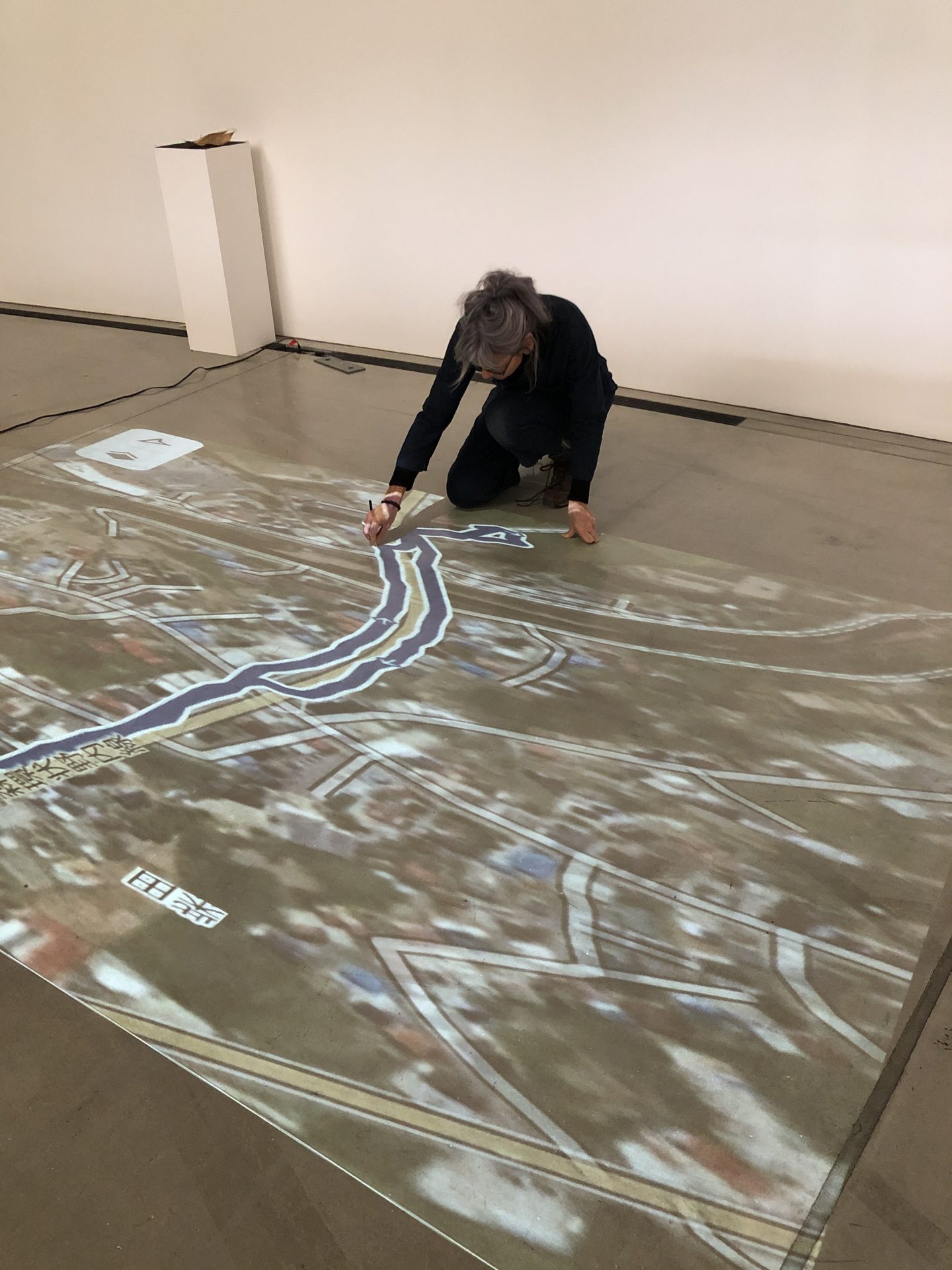
展覧会という成果発表の枠組みの中で、その体験を「痕跡」としてインスタレーションへと落とし込むことは、私にとって非常に大きな挑戦でした(これほど集中的に、かつ怒涛のスピード感で制作に取り組んだことはなかったと思います)。客観的に振り返ってみると、言語も文化的なコードも場所も、他の展示作家も、青森でともに歩いた人々のことも、何もかも十分に知らないまま、さらに気候の変化によって葉の状態にも様々な問題が生じる中で、わずか2週間足らずでこれを成し遂げたのは、正気の沙汰ではなかったですね。後悔や心残りはまったくありませんが、時間に振り回されず、その流れに寄り添いながら制作に向き合う分別が、アーティストとしての自分に必要なのだと、いまは言い聞かせています(笑)。本プログラムのもうひとつの特徴は、オープニング後もインスタレーションを継続して更新していくことができた点です。一般的なことではありませんが、特にレジデンスという枠組みの中では、私にとって非常に理にかなったことでした。納得のいくまで自由に制作を続けさせてくださったチームには、心から感謝しています。
他のアーティストやゲスト審査員、地域の人々といった他者との協働ややりとり、この土地について印象にのこっていることなどはありますか。
八幡亜樹さん、浅野友理子さん、マギー・チュウさんとの出会いは、私にとって本当にかけがえのないものでした。さらに、それが異なる視覚芸術表現が交差する場での邂逅でもあったことは、私にとって素晴らしい経験でした。多くの言葉を交わしたわけでも、統一性を意識していたわけでもありませんが、展示空間の中で、何かがごく自然に、有機的に立ち上がっていたように感じています。そうした出会いの瞬間に居合わせることができたことは幸運でした。
近藤亮介さんとの出会いも、東京に到着て初めてお会いした瞬間から、最後に図書館で交わした会話に至るまで、その一連の時間の流れとともに、強く記憶に刻まれています。
同様に、カタログを頂いた際に拝読した瀬藤朋さんや慶野結香さんのテキストもとても印象的でした。キュレーターやゲスト審査員の方々から私たちの作品に対するフィードバックを頂けたこと、また、それぞれの視点や文化、知識を通して作品の受け止められ方に触れられたことを、とてもありがたく感じています。
地域住民の方々と出会う機会となった散策も記憶に焼き付いています。どの回もそれぞれに異なる体験でしたが、いまも鮮明に心に浮かび上がる出来事がいくつもあります。
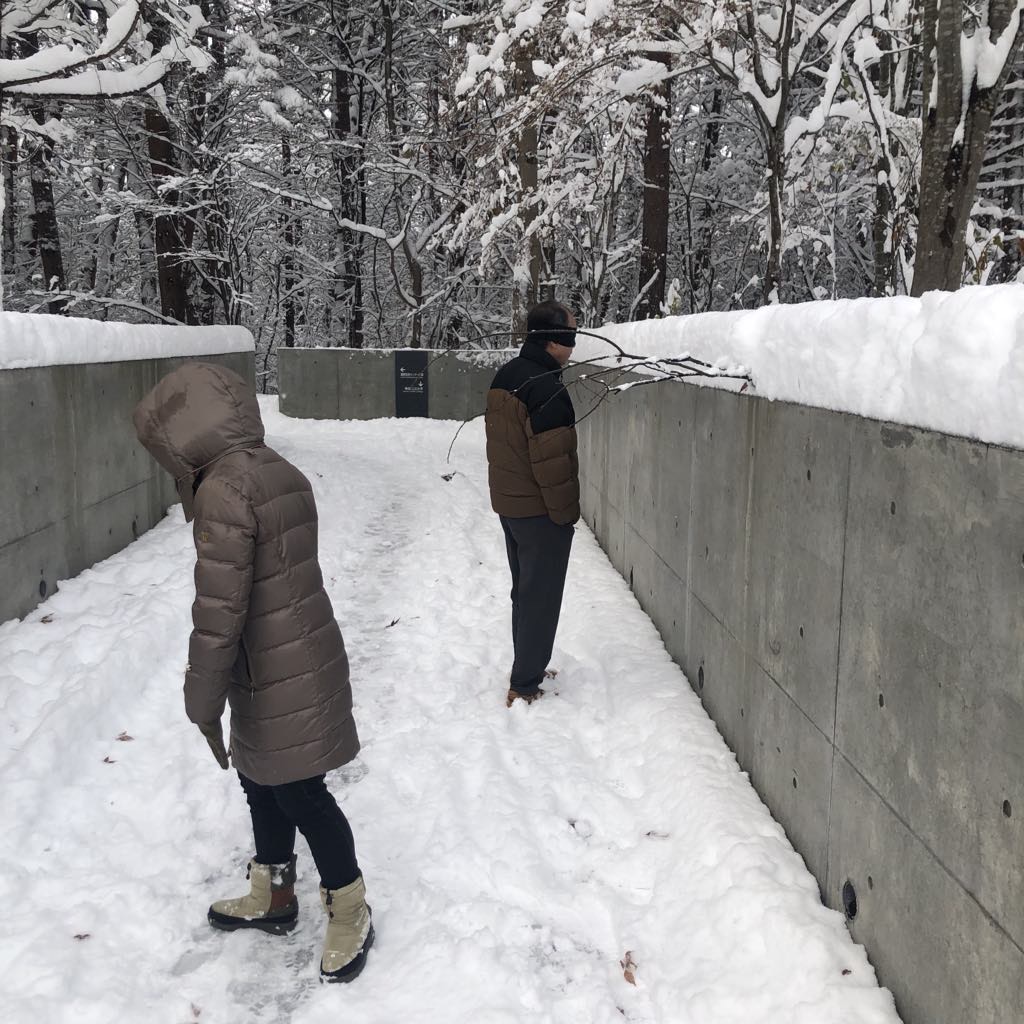
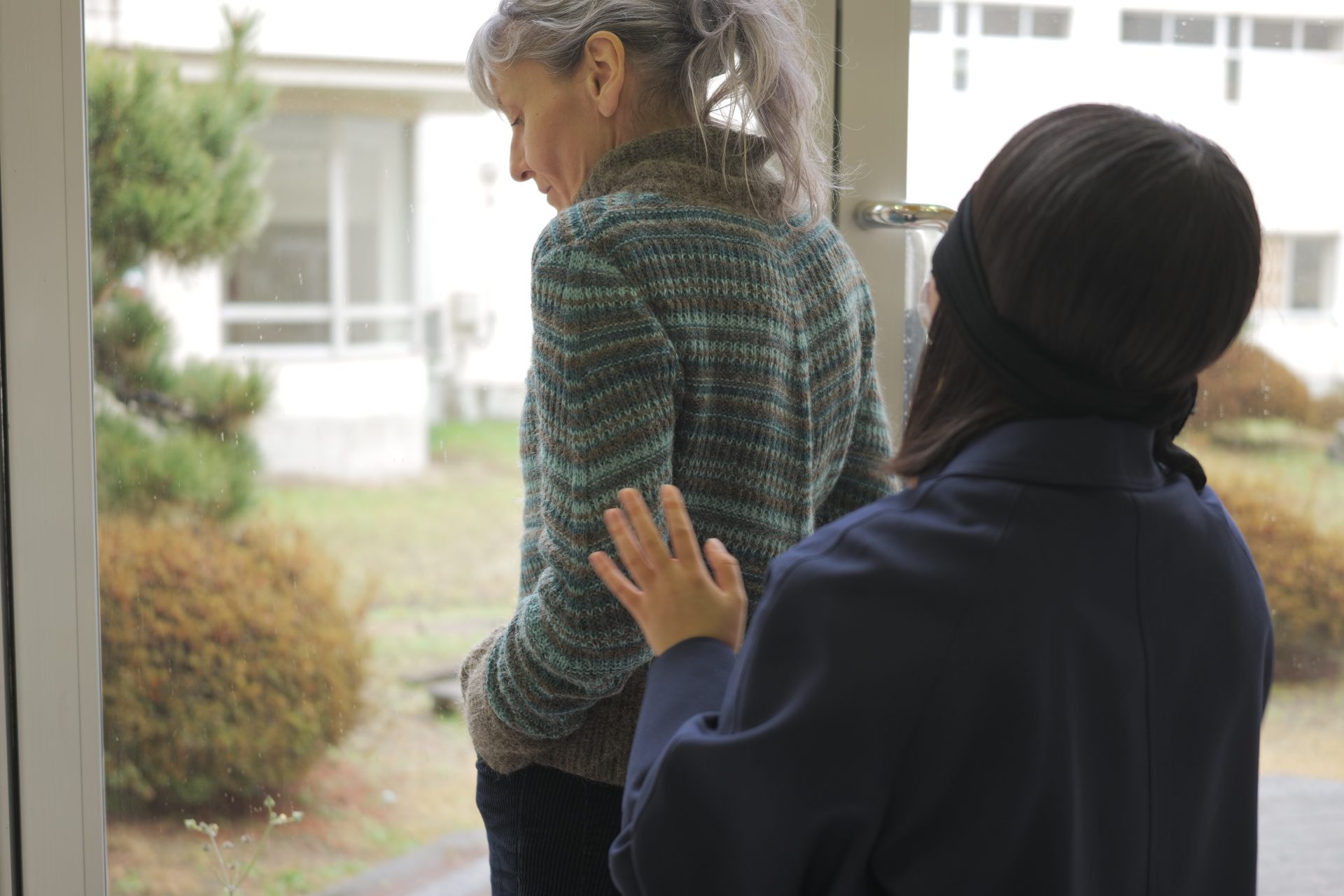
ワークショップでも、忘れがたい瞬間がたくさん生まれました。こちらが提案した体験に参加者が没頭し、その体験によって身体のあり方そのものが変化していくのを目の当たりにできたことは、思いがけない幸いでした。
この冬は、青森の土地を恋しく思い返していました。人生であれほどの積雪を見たことがなかったので、とても感動しました。
何より、青森の自然の力は圧倒的でした。そこには、身体的にも精神的にも深い痕跡が残されています。この場所にいると、ふとした瞬間に生きることや大地への感謝の気持ちが湧き上がり、それが日を追うごとに深まっていきます。自分という存在の小ささを感じるほどに、自然の営みやそこから生まれる美しさに、もっと耳を澄ませ、見つめていたいという気持ちになるのです。
今回の経験は今後の活動にどのような影響をもたらすと思いますか/もたらしましたか。また、これから予定している活動などあれば教えてください。
今回の経験を通して、イベントのためにパフォーマンスを行う機会を少し減らし、そのぶん、パフォーマンスや体験をインスタレーションとどのようにつなげていくのか、あるいは体験そのものをいかに創造的な身振りとして記録しうるのか、そうしたリサーチにより多くの時間をかけたいと思うようになりました。
レジデンス中に始めた俳句は、もちろんこれからも続けていくつもりです。実はACACでの滞在後、戦時下の日本で弾圧された新興俳句や反戦的俳句を収めたレジスタンス俳句撰(日本語・フランス語併記)に出会ったのですが、それが非常に興味深い内容で、新しいプロジェクトのインスピレーションとなりました。
ここ数か月は、自分でも「抵抗(ルビ:resistance)」をテーマにした俳句や短詩を集め、それをタイプライターで葉に印字する《Arbofolio》(エスペラント語で「木の葉」の意)というプロジェクトを進めています。世界中の詩を集めたいと考えているので、とても長い時間をかけて育てていくプロジェクトになりそうです。いずれは葉の複製を公共空間で配布したり、展示という形でも発表できればと考えていますし、日本語タイプライターを使って、この木の葉プロジェクトをさらに発展させたいと思っています。
現在は、ベルギーの精神科施設に併設された KAOS のレジデンス・ワークスペースで、精神的なケアを必要とする方々とともに2か月間の滞在制作を始めようとしているところです。そこでも「歩行」が起点になる予定です。
同時に、ウォーキングアート(歩行芸術)をテーマにした2か月間のウェビナーにも参加し始めており、とても刺激を受けています。
青森に滞在していた頃と比べると、世界は分断や不安定さが増し、社会情勢は大きく変化したように感じられます。そうした社会の変化の中で、「歩く」という行為について新たに感じていることや考えていることがあれば教えてください。
ここ数か月は自然の中を歩く時間がほとんど取れていませんでしたが、ベルギーで行われたデモの際には、できる限り歩くよう努めました。昨日も、市民的不服従と歩行を提唱したヘンリー・デイヴィッド・ソローのことを考えていました。彼の思想が、マハトマ・ガンジーやマーティン・ルーサー・キング・ジュニアをはじめ、非暴力抵抗運動に関わる人々に現在もなお大きな影響を与えていることを思うと、いま改めて「歩く」という行為を見つめ直すことには意味があるはずです。
歩くことは抗議と抵抗のためのひとつの手段です。加速する社会や資本主義、環境破壊に立ち向かうための行為であり、歩くのに必要なのは、自分の足だけです。
軍事的に傾く社会、自然破壊、貨幣の力、そしてAIの急速な進化に直面するいまこそ、HI(人間の知性)、すなわち人間の固有性へと立ち返る時なのかもしれません。アンドレ・ルロワ=グーランが述べたように、人類の進化は脳ではなく、足から始まったのです。
最近、タハール・ベン・ジェルーンによる一冊の本を読みました。ジャコメッティのアトリエをめぐる美しいエッセイの最後に、次のような一節があります。「ジャコメッティの作品の前に立つと、人は謙虚さで満たされる。気圧されるほどに。なぜなら、世界からもあらゆる市場価値からも身を引いた一人の人間が、土を、金属を刻みながら、ナチス時代に彼自身が経験したような直近の悲劇であれ、人が人を辱め続けてきた遥か昔からの悲劇であれ、あらゆる人間の悲劇を記憶にとどめつつ、我々という存在そのものを表現してみせたのだから。」
《歩く男》を眺めても、世界の混乱や問題を解決するわけではありませんし、私の怒りを和らげてくれるわけでも、無力感に応えてくれるわけでもありません。それでもなおこの作品は、歩き、創り続けたいという私の欲求を保ってくれます。そしてそこには、希望が存在するのだと思います。
(インタビューは2026年5月に実施。)
英日翻訳:ペンギン翻訳(加藤久美子、杉山千枝)
Participated in Artist in Artist in Residence Program 2024 “SPINNING SCAPES”
What inspired you to become an artist, and how did you embark on this path? Please share your journey, including what you have learned and what has influenced you.
As long as I can remember, when I was a child, I eagerly awaited the end of the meal to return to my room to read books and listen to music. One of the records I asked for a birthday was “The Four Seasons” by Vivaldi. From spring to autumn, I was used to meet the cherry tree in the garden and talk with fairies who, according to me, were living in this tree.
As long as I can remember, it was at the age of 12 that I asked to take declamation and theater classes. Quite quickly I found myself in an amateur theater troupe with people who were 30 to 50 years older than me…As long as I can remember, at 16, I saw a show at school that marked me: “The Wanderers” after which a few of us had the great chance to do an internship with Pierre Vincke and Bettina Windelschmidt based on the Grotowski method.
As long as I can remember, at school, our French/literature teacher gave us the list of books to read over two years saying that we did not need her for that, but that we would analyze films, visual arts, shows together. It was through her that I discovered cinema, resolutely contemporary theater and works such as Picasso’s “Guernica.” Suddenly it comes back to me that my paternal grandmother started painting at the age of 80, when I was a child/teenager, but I don’t really have memories of that… but who knows, maybe it influenced me?… Despite a family not very inclined towards the arts, I stubbornly went towards theater. I remember a great friend at the Brussels Conservatory who introduced me to poets such as Paul Valéry, Mallarmé, St John Perse,… but also several visual artists like Giacometti, Matisse, Léger, G. Richier… I will never forget the visit he took me on to the Picasso Museum in Antibes, blindfolded until we reached the painting “The Last Concert” by Nicolas de Stael. Or our night runs along the sea shouting verses of Valéry into the night… After the Conservatory, there was the meeting with the author Veronika Mabardi and the painter Jean Vercheval which led to a show around the character of Mary Magdalene: a show in which every evening a painting was created… And then there was the educational experience of the Humanities Theatre in Louvain la Neuve, where we explored industrial, non-theatrical places,…. Then came the Ricochets Company, then trips to India between dance and Carnatic music, then performance art with the meeting of Boris Nieslony and Monica Klingler,… But also many other encounters. These are the encounters that have led me to art, have made me move from one form to another, each time opening new windows, new angles of perception and creation…
What motivated you to apply for the Artist in Residence Program 2024 “SPINNING SCAPES”?
When I was invited by Daisuke Takeya in 2023 for the event R5 since then | I from now, it was somewhat a shock to find myself in Japan. In the sense that my bearings were shaken. My five senses were disturbed. My relationship to space and time was questioned. The notion of landscape presented itself to me, the relationship of humans to it… Something difficult to put into words, from the culture I come from. As if I didn’t have the terms to express a perception of existence… A desire to return to this country was clearly present… Without knowing when or how or why… When I read the call for applications for“SPINNING SCAPES”, while I was working on walking, it seemed obvious to me: the title and my project presentation, the place of forest, the environment, the season of autumn with the slide from autumn to winter, the potential meeting with visual arts artists, …
Were there any new discoveries or challenges you encountered during your research, artwork creation, or final presentation at the AIR program?
Oh yes! I discovered an amazing natural environment which brings any kind of artist I think to a unique perception of the body on the earth. It brought me to come back to the notion of art as way of meditation, to be more attentive to the nature which is an amazing creator. By this way, it brought me back to the notion of poetry as “doing it in the process of doing” but also as formal language. Even if I’m not a poet, the exercise of daily haikus brought me to a daily practice of writing which comes from the observation of outside and inside space.
During walks with local residents, I also was surprised; the proposal was to walk in silence, but I realized that all of them wanted to talk, to share,… It was challenging about language (and many thanks to who accompanied me and translated…!) but also because it gave me so much information on many levels about the city, the nature, their stories and History, the culture, etc. Unfortunately, I was not able to use all these elements (which would bring to a documentary…) but it questioned myself about many aspects of life.
Because of choice/request of being part of the exhibition, the way to bring the experience to installation of traces was very challenging for me (I don’t think I have ever worked so quickly and so intensely before in my career). When I think back on it, from a distance, I tell myself that it was pure madness to accomplish this in less than two weeks, without knowing the language, cultural codes, the place, the exhibition partners, the walkers of Aomori, with a changing climate causing technical problems for the leaves. I regret nothing but today I tell myself that it would be time for me as an artist to become wiser, to embrace time without wanting to provoke it? 😉 … Another characteristic of this project is that I was able to continue evolving the installation after the “opening”. This is not common but makes so much sense to me, especially within the framework of a residency. I am infinitely grateful to the team for having let me be completely free.
Did any interactions with other artists, guest judges, or local community members leave a strong impression on you? What are your lasting impressions of this place?
Sure. The encountering with Aki Yahata, Yuriko Asano, Maggie Chu was very precious to me. It was great also to have this encountering between different forms of visual art. And even if we didn’t discuss so much or tried to have so coherence, I felt that something happened organically in the space of exhibition. It was also very nice for me to feel at some moment crossed by these encounterings. I keep also a strong memory from the first encountering with Ryosuke Kondo when we met on my arrival in Tokyo to the last meeting at the talk in the library.
Like the text Tomo Setou and the text by Yuka Keino I discovered when I got the catalogue. It’s so great when curators and guest judges give feedback about our artwork, or how they perceive it regarding their ways, to their culture, their knowledge etc…
Each walk which gave me the opportunity to meet residents was very strong as well. Each was unique, different but some moments of each walk stay very present in my mind.
Some moments of workshops were also very strong to me. When you see someone who is very focused on the experience you propose to do, and you see a body changed by the experience, that’s a wonderful gift.
About the place, well I really missed it this winter. I never saw so much snow in my life… It let a strong sensation…
And definitively, in Aomori for me the power of nature was so strong. It let a deep physical and spiritual trace… There you suddenly, day by day, feel grateful to life and earth. You feel nothing and want to listen/ to look more and more to the life of nature and art created by it.
How do you think this experience will influence your future practice/ has experienced your current practice? Also, if you have any upcoming projects, please share them with us.
It clearly gave me the desire to perform less for events, to take more time for research connecting “performance” or “experience” and installation or how to record an experience in creative gesture.
The practice of haikus gave me of course the desire to continue. After the residency at ACAC, I discovered a book of haikus from Japanese resistance (edited in Japanese and French). It was so interesting and inspiring that it brought me to a “new project”. Since some months, I collect haikus or short poems about the thema “resistance” that I type on leaves with my typewriter. I call this project Arbofolio (“tree leaf” in Esperanto). It’s a long long project as I would like to collect poems from all countries all over the world. I want to distribute a copy of these leaves in public spaces but also maybe one day exhibit them. And I hope maybe one day to develop a project with these tree leaves on a Japanese typewriter…
Actually, I’m on the way to start a residency for two months at Kaos Center/Workspace in a psychiatric institution with psychotic people. There my first motor will be walking.
At the same time, I am starting to follow a two-month webinar on walking art, it’s very exciting.
Since the time you were in Aomori, the global situation seems to have changed significantly, with increasing division and instability. In the midst of these social changes, if you have any new thoughts about the act of walking, please share with us.
I didn’t take time to walk in nature for months. On the other hand, I walked as much as I could during the demonstrations we had in Belgium. I was still thinking yesterday about H.D. Thoreau, a passionate advocate of civil disobedience and walking…. When we know also how he has inspired Ghandi, Martin Luther King or other people who were/are involved in nonviolent resistance, it would be maybe interesting to look again to that…
For sure, walking is today a tool of protesting and resisting. Resist to speed of our society, to capitalism, the destruction of our environment… You don’t need anything to walk, just your feet…
Facing the militarization of the society, the destruction of nature, the power of money, the crazy evolution of AI, it’s maybe time to come back to the essence of HI, to the specificity of humanity. And, as said Leroy Gourhan, human evolution did not begin with the brain but with the feet…
I recently read a beautiful book written by Tahar Ben Jelloun about Giacometti’s atelier. Here is the end of the text: “Standing before Giacometti’s work, one feels filled with humility. One is intimidated, because a man set apart from the world, detached from all market value, managed to express us all, by carving into the soil, by carving into the metal, and by remembering human tragedy, whether immediate—like the one he experienced during Nazism—or distant, and which has existed ever since man humiliated man”
Looking to The Man who is walking doesn’t resolve the problem or the world’s chaos, it does not soothe my anger or respond to my feeling of helplessness but it maintains my desire to walk and create. Some hope on some way…
*Interview conducted in May 2026.