丹治 りえ
TANJI Rie
1983年福島県生まれ、沖縄県在住。2009年沖縄県立芸術大学大学院造形芸術研究科環境造形専攻彫刻修士課程修了。建造物の中の日常空間をモチーフに、建築資材や日用品など身近にある素材をアッサンブラージュし、仮設的な構造物を制作して、人間とモノまたは人間と環境の関係性を探っている。同時に社会的な力学によって生まれる構造とともにその影で見過ごされてしまう個人的な出来事に関心を寄せ、モノや場に対する人間の感覚を揺さぶる作品を展開することを試みている。
Born in Fukushima Prefecture in 1983, Tanji now resides in Okinawa Prefecture. In 2009, she received an MA in Sculpture from the Environmental Design Major of the Graduate School of Formative Arts at Okinawa Prefectural University of Arts. Using the everyday spaces within buildings as a motif, she uses found objects such as construction materials and household items to create assemblage pieces which serve as temporary structures examining the relationships between people and things, or between people and the environment. At the same time, she is concerned with the structures born out of social dynamics and the personal events that such structures obscure, creating works which attempt to shake up people’s perceptions of objects and sense of place.
- 日本語
- ENGLISH
アーティスト・イン・レジデンス プログラム2025「CAMP」 参加
アーティストになろうと思ったきっかけや、どのようにしてアーティストとなったのか、学んできたことや影響を受けた物事などを踏まえて教えてください
よくある話ですが、幼いころから絵を描くのが好きでした。一方でマーチングバンドのドラムを10年くらいやっていたので、それを続けたいと思っていましたが、高校進学の際に進路を考え美術大学に行きました。デザイン科に進学したのですが、その時の授業の一つで現代アートを知り、編学しました。その後、大学院進学を機に沖縄に移住したこと、そして東日本大震災を経験したことが現在の制作手法へとつながっています。アーティストは社会の状況に対して迅速に反応することが求められるかもしれませんが、震災後はすぐに制作向き合うことができず、自身の中で整理し制作するのに7年くらいかかりました。
今回のAIRプログラムに応募したきっかけを教えてください
現在沖縄を拠点に制作活動をしていますが、沖縄は歴史的にも地理的、政治的にもとても複雑な構造に置かれています。より知るためには外へ出ることも必要だと思い、本土最大の米軍基地を有している青森へ行ってみたいと思うようになりました。また私は福島出身ですが、同じ東北なのに訪れたことがなかったのでより応募してみようと思いました。40歳を過ぎると応募できるプログラムが限られる中、ACACのAIRプログラムは年齢制限が無いので挑戦できる機会を与えていただきとても嬉しかったです。
AIRで行ったリサーチ・作品制作・成果発表において新たに発見したことや挑戦したことなどあれば教えてください
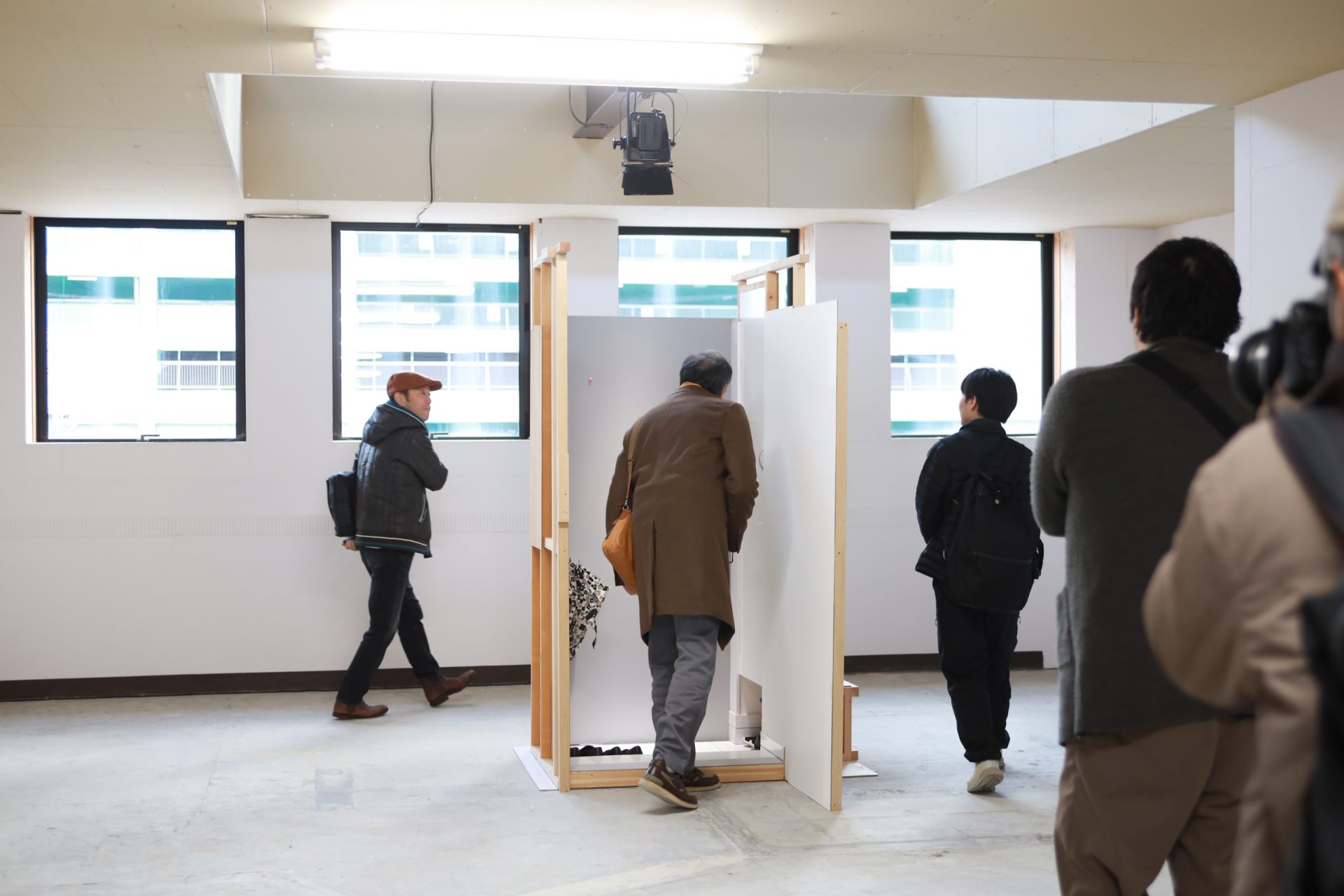
一つの場所で完結しないかたちで作品をみせたいと思っていたので、成果発表の会場に加えてサテライト会場でも展示を行いました。アーティストも、作品も物事も一方向ではなく多面的、多角的な側面を持っていると考えています。今回の展示では、そうした複数の視点の一端を示すことができたのではないかと感じています。また、今回初めてワークショップを行ったのですが、リサーチや制作にとどまらず、他者の感性や物事の捉え方に触れることで、青森という土地をより知ることができとても良い経験になりました。
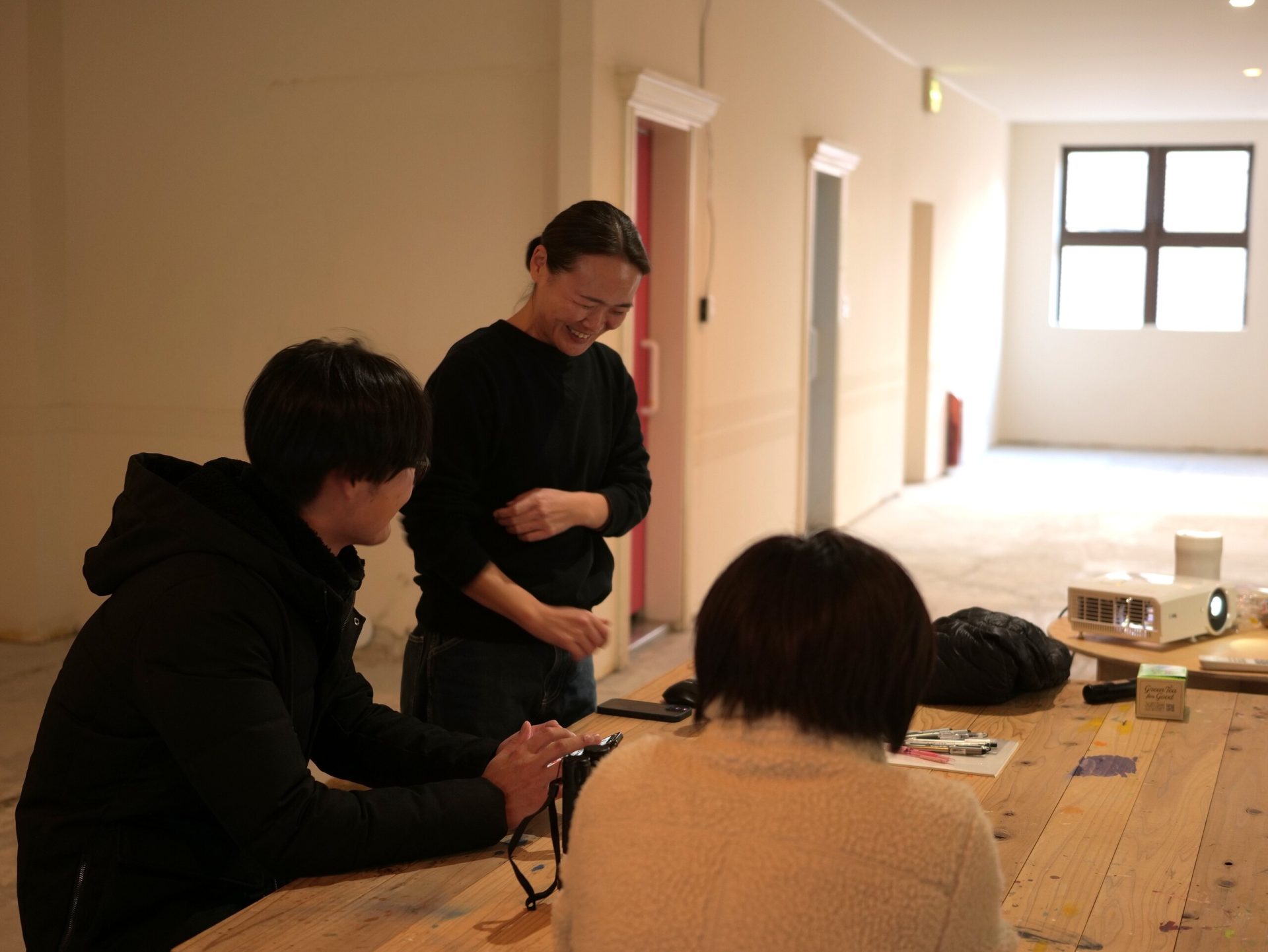
他のアーティストやゲスト審査員、地域の人々といった他者との協働ややりとり、この土地について印象に残っていることなどはありますか
多くの出会いがあった中で、特に印象に残っているのは、三沢市に滞在した際に偶然入った居酒屋での出来事です。そこで出会った店の方や常連の方々から、三沢という土地への思いを直接伺うことができました。滞在中は事前にアポイントを取り、インタビューなどを行ったのですが、また違う距離感で語られる言葉に触れられたことが、とても印象的でした。そのことがきっかけで、三沢市以外にも六ケ所村や、斗南藩の開拓についてもリサーチで足を運ぶようになりました。また、三沢市の「ヌードルハウス丸美屋」の92歳の初代店主の方にお話を聞き、朝鮮戦争当時の三沢市の様子を伺えたのはとても貴重な機会でした。
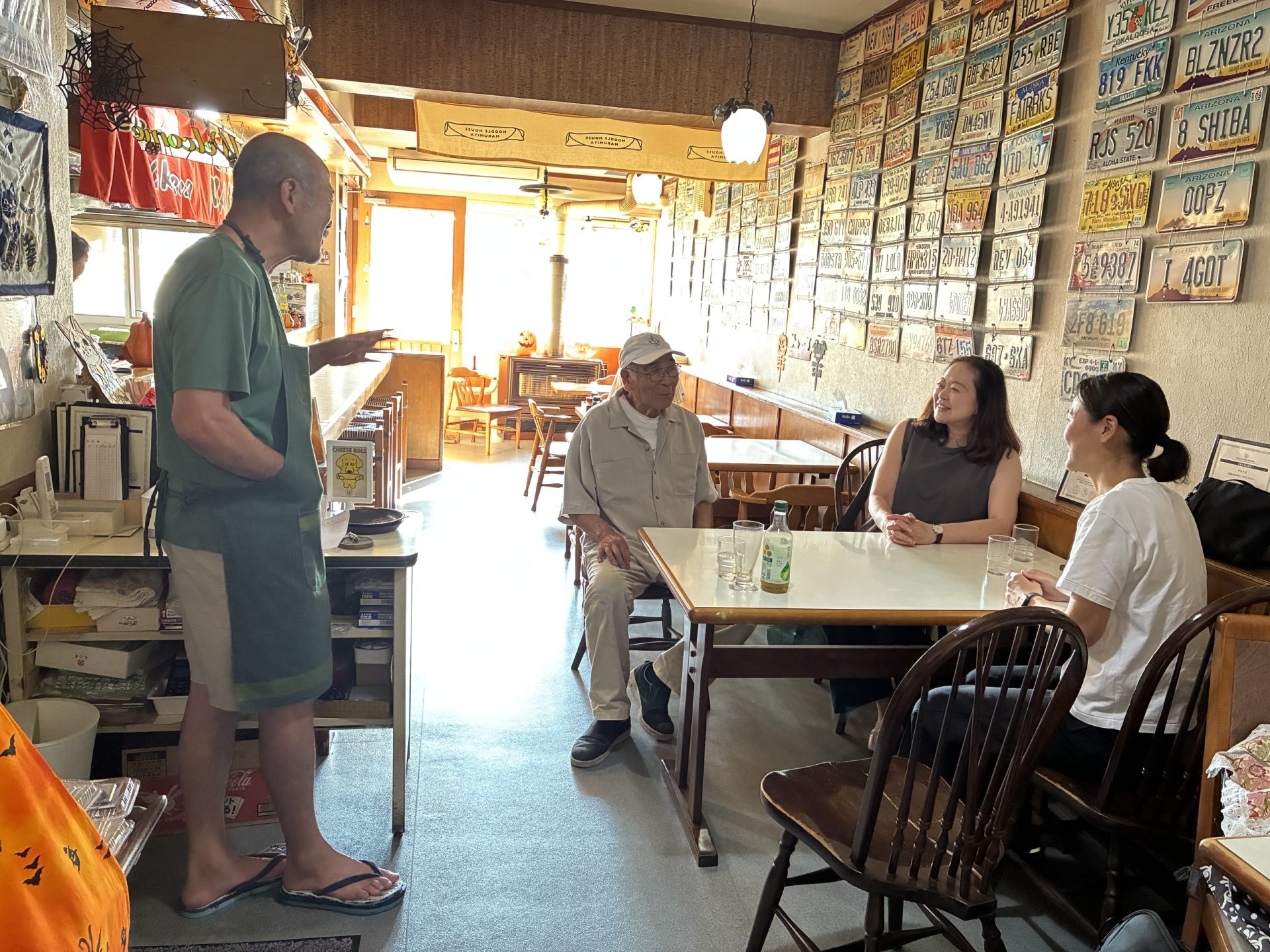
今回の経験は今後の丹治さんの活動にどのような影響をもたらすと思いますか。また、これから予定している活動などあれば教えてください
今回の経験で大きかったのは、自分の中にあった無意識の見方に気づけたことです。最初は、米軍基地があるという共通点から、沖縄と青森をどこかで重ねて見ようとしていた部分がありました。でも、「共通点で結びつけてしまう」自分の視点そのものに気づけたのは大きな発見でした。もちろん似ているところもありますが、それだけでは見えない違いや、それぞれの土地の捉え方の違いがあることを、実際に行って、人と話して、滞在する中で実感しました。当たり前のことですが、どの場所にも誰かの生活があって日常がある、ということを改めて強く感じました。
このプロジェクトはこれまで他のレジデンスでも続けてきたものなので、今後も継続していきたいと思っています。タイミングがあれば、それらをまとめて一つの作品として発表できたらと考えています。
丹治さんの作品に一貫して流れている感覚や問いがあるとしたら、それはどんなものですか
「日常とは何か」という問いがいつもあります。悲しみや苦しさ、受け入れがたい出来事がある中でも、日常という時間は変わらず流れ続けています。
その中には、個人の感覚だけでは捉えきれない重層的なものが常に入り込んでいると感じています。建築の内と外、個人と社会、身体と環境といった境界は、はっきりと分かれているものではなく、実際には互いに浸透し合いながら存在しています。
そうした境界は固定されたものではなく、常に揺らぎながら、他者へも影響し行き来するもの——そのような感覚を、作品を通して探り続けています。
Participated in Artist in Residence Program 2025 “CAMP”
Could you please talk about what made you decide to become an artist? How did you get started? What have you learnt since then? What influences have shaped your practice?
Like many people, I discovered the joy of drawing as a young child. I also played the drums in my school marching band for about 10 years. I wanted to keep going with that, but when I entered high school, I started thinking about my future, and decided to enter an art university. I first enrolled in the Design course, but then I learnt about contemporary art in one of my classes, and switched over to that. My later move to Okinawa to attend graduate school, and my experience of the Great East Japan Earthquake and Tsunami, have both had an impact on my current practice. It may be true that artists are expected to respond quickly to the current state of the world, but after the earthquake, I found myself unable to get back to my work right away. In fact, it took about 7 years for me to sort myself out and start producing art again.
What was your motivation for applying to this AIR programme?
My artistic activities are currently based in Okinawa, which exists within a quite complex historical, geographical, and political context. In order to better understand this context, I felt that I needed to step outside of it, and I started to become interested in visiting Aomori, which is home to the largest American military base on the main islands of Japan. And since I had never been to Aomori before, despite being from Fukushima in the same Tohoku region, I was even more motivated to apply. Once you pass 40 years old, the choice of programmes to which you can apply narrows significantly, but the AIR programmes at ACAC do not have any age restrictions, so I was very happy to have this opportunity to challenge myself.
Could you talk about any new discoveries that you made or challenges that you faced during the research, production, and presentation of your work as part of this Artist in Residence (AIR)?
I wanted to show a work that could not be contained in one single place, so my exhibition required a satellite venue in addition to the Results Presentation venue. I do not believe that an artist or a work of art – or anything else, for that matter – is one-dimensional. Everything has manifold, multifaceted aspects. I feel that, with this exhibition, I was able to provide a glimpse of those multiple perspectives. This was also the first time I had conducted a workshop; it was a wonderful experience being able to learn more about Aomori, not only through researching and producing my artwork, but by engaging with other people’s sensibilities and points of view.
Is there anything that stands out in your memory about the place itself, or about your collaborations and interactions with other people, such as your fellow artists, the guest judge, or the local residents?
Among my many encounters during the residency, one that really stands out for me happened when I wandered into a random izakaya pub while I was staying in Misawa City. I was able to hear firsthand what the staff and regular customers thought about the city. During my stay in Misawa, I had arranged some interviews and meetings in advance, but it was striking to hear what people had to say about the same topic from a completely different level of formality. Inspired by that experience, I decided to visit other areas outside of Misawa in order to research places like Rokkasho Village and topics like the settlement of the Tonami Domain in Eastern Aomori in the late 19th century. I was also able to meet the 92-year-old original owner of ‘NOODLE HOUSE MARUMIYA’ in Misawa. It was a truly valuable opportunity to hear stories about what life was like in the city during the Korean War period.
How do you think this experience will impact your future activities? And do you have anything planned at the moment?
The biggest thing that I gained from this experience was discovering my own unconscious perspectives. Initially, there was a part of me that was looking for some kind of overlap between Okinawa and Aomori, to tie the two places together based on their shared experience of hosting American military bases. But realising that this was what I was trying to do was a big discovery for me. Naturally, there are some similarities between the two places, but by actually visiting Aomori, talking to its people, and staying there, I realised that these similarities belie important differences, and that the people of Okinawa and Aomori also view their situations in different ways. It was a vivid reminder, as obvious as it sounds, that the people in any given place have their own sense of everyday life.
I have continued this project in other residencies, and I hope to keep working on it in the future. If I can find the time, I want to put everything together and present it as a single piece.
Is there a consistent feeling or question that runs through your works?
I am always asking: ‘What is everyday life?’ Even in the midst of sadness, suffering, and hardship, this time that we call ‘everyday life’ continues to flow as it always has.
I feel that, within this ‘everyday life’, there is always some multi-layered thing that cannot be fully grasped by one individual’s perception alone. The inside and outside of a building; individual and society; body and environment – the borders between these things are not clearly defined. In reality, they share an intermingling coexistence.
These are not fixed borders; rather, they are constantly in flux, with each side influencing and being influenced by the other – this is the feeling that I continue to explore through my works.
Translated by Ethan SAMES
関連プログラム
-
アーティスト・イン・レジデンス プログラム2025「CAMP」Artist in Residence Program 2025 “CAMP”プログラム期間:2025年9月15日(月)-12月15日(月)Program period: September 15 (Mon) – December 15 (Mon), 2025
- AIR
- 展覧会
- ワークショップ
- レクチャー/トーク
- 公演
- その他
-
【展覧会】アーティスト・イン・レジデンス プログラム2025「CAMP」[Exhibition]Artist in Residence Program 2025 "CAMP"2025年11月14日(金)-11月29日(土)
※11月17日(月)のみ休館日Nov. 14 (Fri) - Nov. 29 (Sat), 2025
*Closed on Monday, Nov. 17- AIR
- 展覧会
-
丹治りえ オフサイトでの作品公開TANJI Rie Off-Site Presentation11月16日(日)、23日(日)13:00-16:00
Nov. 16 (sun), 23 (sun), 13:00-16:00- AIR
- 展覧会
- その他
- イベント
-
丹治りえワークショップ「きおくのきろくをさがし、きろくのきおくをたどる」TANJI Rie Workshop “Seeking the record of memory, tracing the memory of record”11月22日(土)10:00-16:00Nov. 22 (Sat), 10:00-16:00
- AIR
- ワークショップ
- イベント