currents / undercurrents 展覧会レビュー:複数の時間、多元化する生命 「currents / undercurrents -いま、めくるめく流れは出会って」をめぐって(石倉敏明)
currents / undercurrents Exhibition Review: Multiple Temporalities, Plural Lifeforms On "currents / undercurrents ー Bringing together the endless flow (ISHIKURA Toshiaki)
- 日本語
- ENGLISH
複数の時間、多元化する生命
「currents / undercurrents ― いま、めくるめく流れは出会って」をめぐって
新しい創造のためには同時代の出来事に対する鋭敏な感性と、過去の創造や遺産に対する絶え間ない探究が求められる。ヨハン・ゼバスティアン・バッハがヨーロッパの民謡を翻案しつつ画期的な多声音楽を作ったように、現代の音楽家ボブ・ディランは、スコットランドやアメリカの民謡に彼自身の詩をつけて歌った。1964年に作曲された「時代は変わる」はまさにこの時代の表層的な変化と、底流としてうごめく感覚や思想の位相変化を表現した見事な音楽的成果であったと言える。
2024年の日本列島では、能登半島の地震や羽田空港での飛行機衝突事故にはじまり、次々に新しいニュースが報じられた。さらにアメリカ合衆国の大統領選挙や長期化するウクライナやパレスチナでの戦争や侵略について、人びとが記憶し続けることが難しいほど情報はオーバーロードされ続けた。水面に発生した小さな泡は、底流の大きな変化に起因するものかもしれない。青森のローカルニュースでも、新入幕力士の優勝からスーパーマーケットの県内撤退、老舗デパートの閉店など悲喜交々の話題が報道されたという。私たちはそうした新しいニュースに驚きつつ、古くから続く習慣を生きる。そしてある日、習慣自体が更新され、新しい小さな渦を生み出す。アーティストもまた、そのような日々の小さな渦を生きている。
2024年に開催された「AOMORI GOKAN アートフェス2024」は、同一自治体における同時多発的な芸術祭プロジェクトとして、とても新鮮に感じられた。とりわけ私の記憶に突き刺さったのは国際芸術センター青森(ACAC)の「currents / undercurrents」展(副題略)であった。もっともACACでは、これまでも多くのアーティストが青森での調査活動や集中的な制作活動を活かしたユニークな展示を行ってきた。今期の展示で特徴的だったのは、展示替えを含む前期・後期の展示期間を設けたことで作家の滞在期間が延長・分散され、半年間に及ぶ滞在型調査や多様なワークショップやイベントが行われたことである。私は幸運にも、前期・後期両方の展示を見ることができたが、どの作品にも調査の深度、創発の鋭さ、技術の豊かさが感じられた。
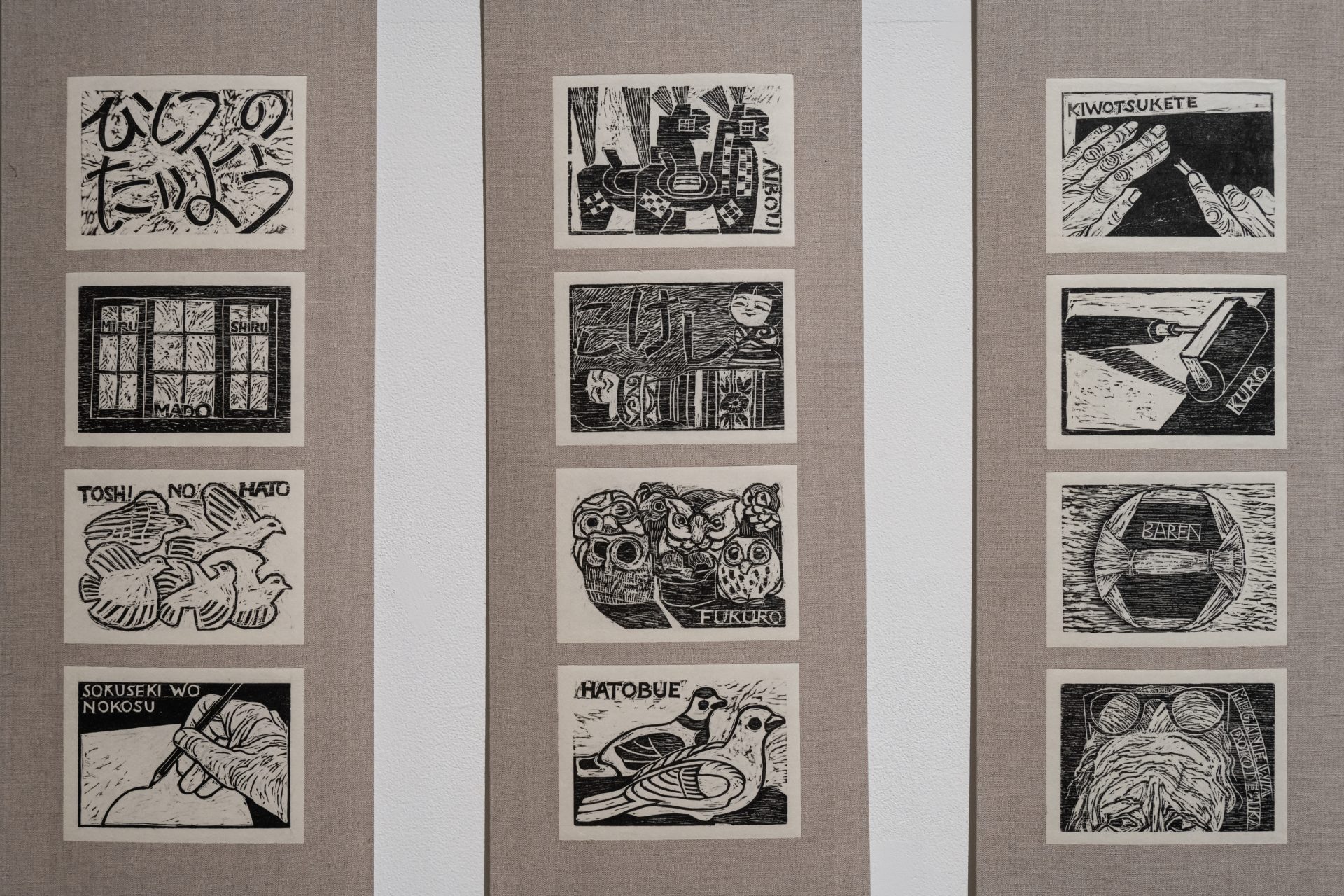
前期展示では、ギャラリーAの入り口で、鈴木正治の《太平洋》シリーズとキリバスで制作されたロビン・ホワイトによる版画が対話し、さらに澤田教一の青森で撮影された三沢基地や小川原湖の写真が導入部の流れを形作っていた。一見非歴史的な曼荼羅のように見える鈴木の《太平洋》は、環太平洋の奴隷交易を含む人間の移動と交信の歴史を考察するもので、さらに旧石器時代の現生人類の移動や人間以前の地球の歴史・大陸移動にも通じている。ニュージーランドとキリバスを往還するホワイトの作品は、鈴木の世界と呼応するように歴史から取りこぼされた女性たちの労働や記録されることのない生の流れを描き出す。戦争・紛争の写真家として知られる澤田は、青森という土地から海を眼差し、さらにそこに設置された自衛隊基地や在日アメリカ軍の基地管理という問題にも迫っている。
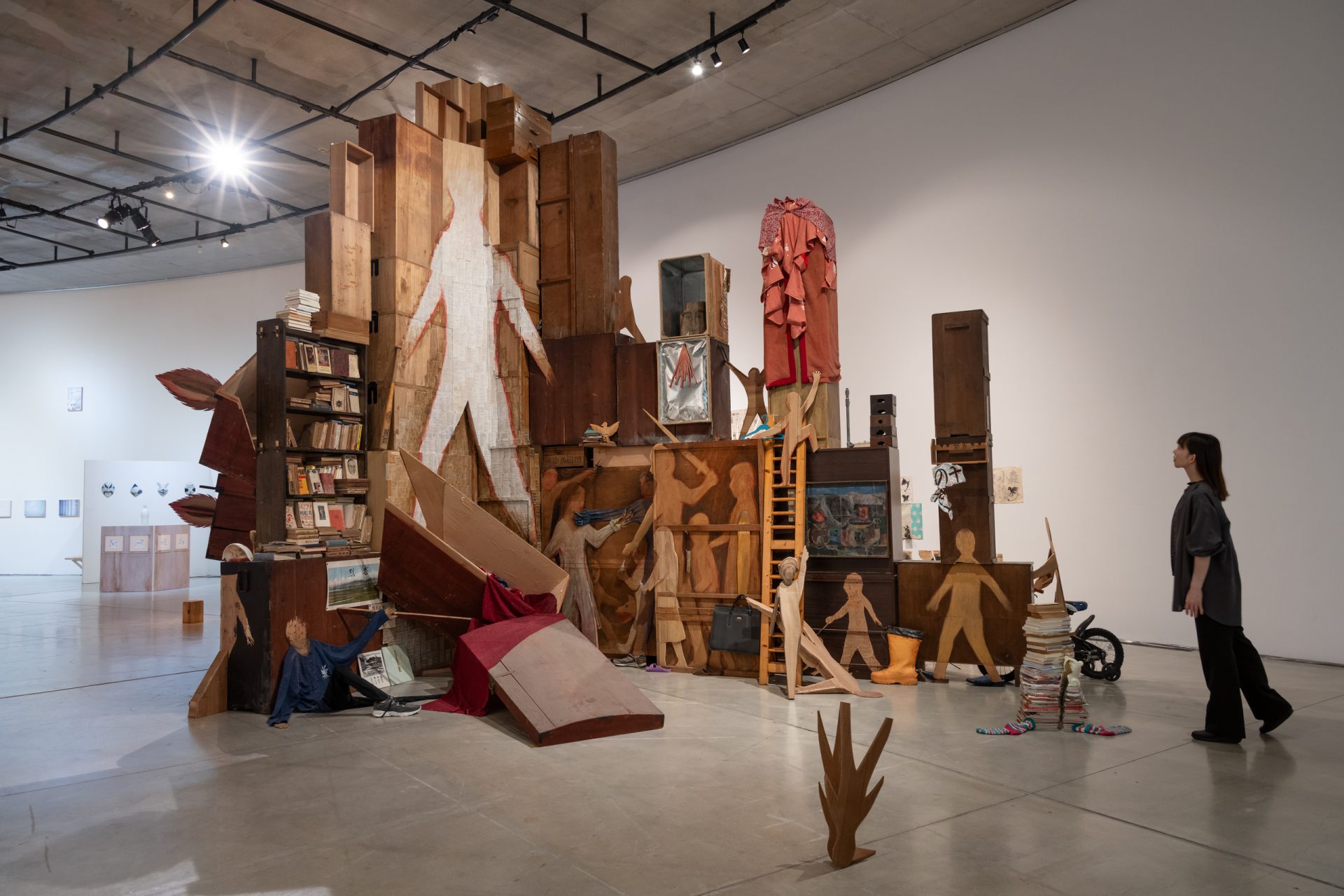
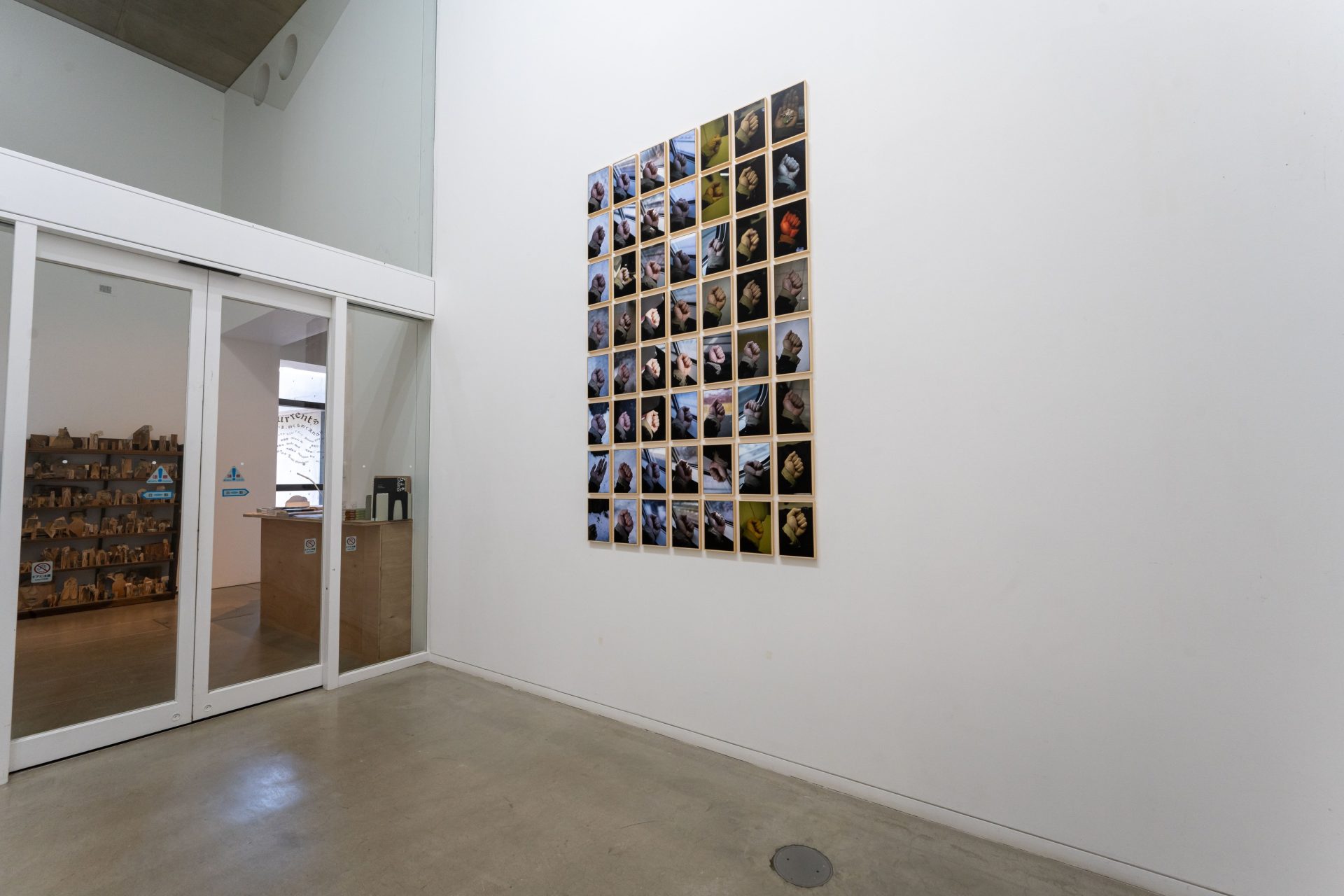
会場を進むにつれ、観衆はハワイのラハイナで発生した山火事の跡を撮影した岩根愛の写真、ジュマナ・エミル・アブードによる神話の断片を思わせるドローイングとビデオ作品、同時代の生と対峙しつつ身体の律動を浮かび上がらせる中嶋幸治の写真シリーズ、青森市に生まれ東西の古代文化を探究した工藤省治による陶磁器とそのデザイン原画へと導かれる。現存作家と物故作家、グローバル世界とローカル世界の作品群がモザイク状に交錯するこの「徒歩旅行」は、さらに、その深部において青野文昭の壮絶なインスタレーションへと開かれていった。青野は川倉賽の河原地蔵尊をはじめとする東北の死者供養の信仰に触れ、モノの奥に潜む霊的な時間を否応なく召喚する。さらにその時間は、過去から現在まで、世界の戦争と暴力の被害者とあった膨大な死者の霊を供養する、荘厳な魂の仕事として立ち現れる。その手つきは苛烈な現実や矛盾に引き裂かれながらも、無差別の慈悲によってその悲惨さと残酷さを克服している。会場の中盤で福島からハワイに移住した人々の死者供養である盆の記憶に触れた岩根は、青野のインスタレーションの先にある最奥の空間で、亡くなった妹を追慕する桜の写真を展示し、青野の作品に深く応答する。
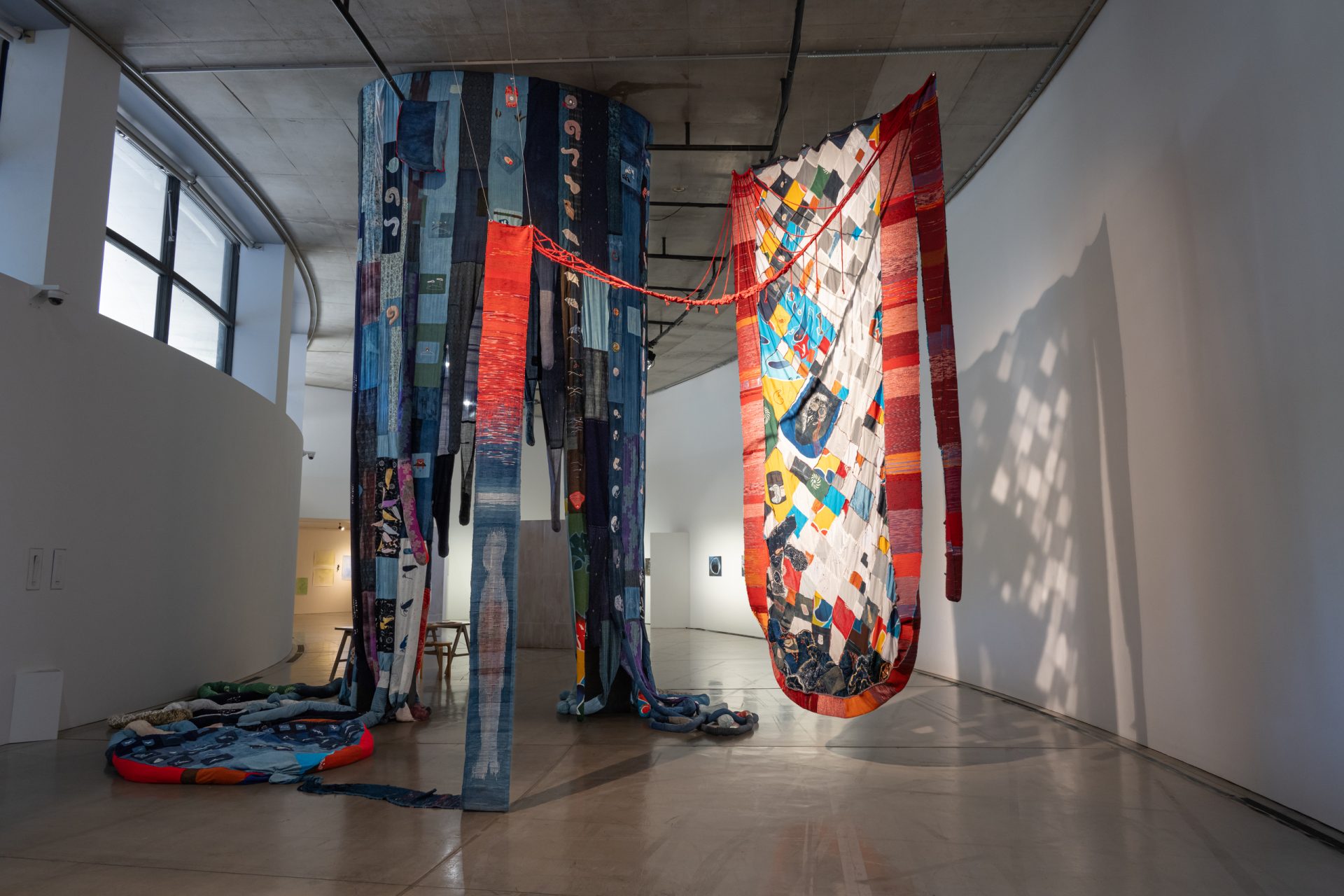
さらにギャラリーBでは、青森県内の布文化を大胆にリミックスした是恒さくらの作品が、巨大な鯨の精霊のように宙を泳いでいた。これは青森県内から集められた着物のハギレを「解き、裂き、重ね、繕い、藍で染め直す」という日常の手仕事の工程を取り入れたものだという。是恒は自身と他者が織りなす手仕事の自己組織性を活かして、複数種の共棲関係にも似た有機的な空間を構築した。その繊細な手仕事によって、行為のうちに秘められた言葉が詩的なフレーズを編み出してゆく。太平洋・日本海・津軽海峡という三つの海を取材した是恒のフィールドワークは、ここでも鯨への畏怖と感謝の記憶を浮き彫りにしつつ、学術的な記録とは異なる道筋でローカルな現実を生きられた歴史に結び付ける。
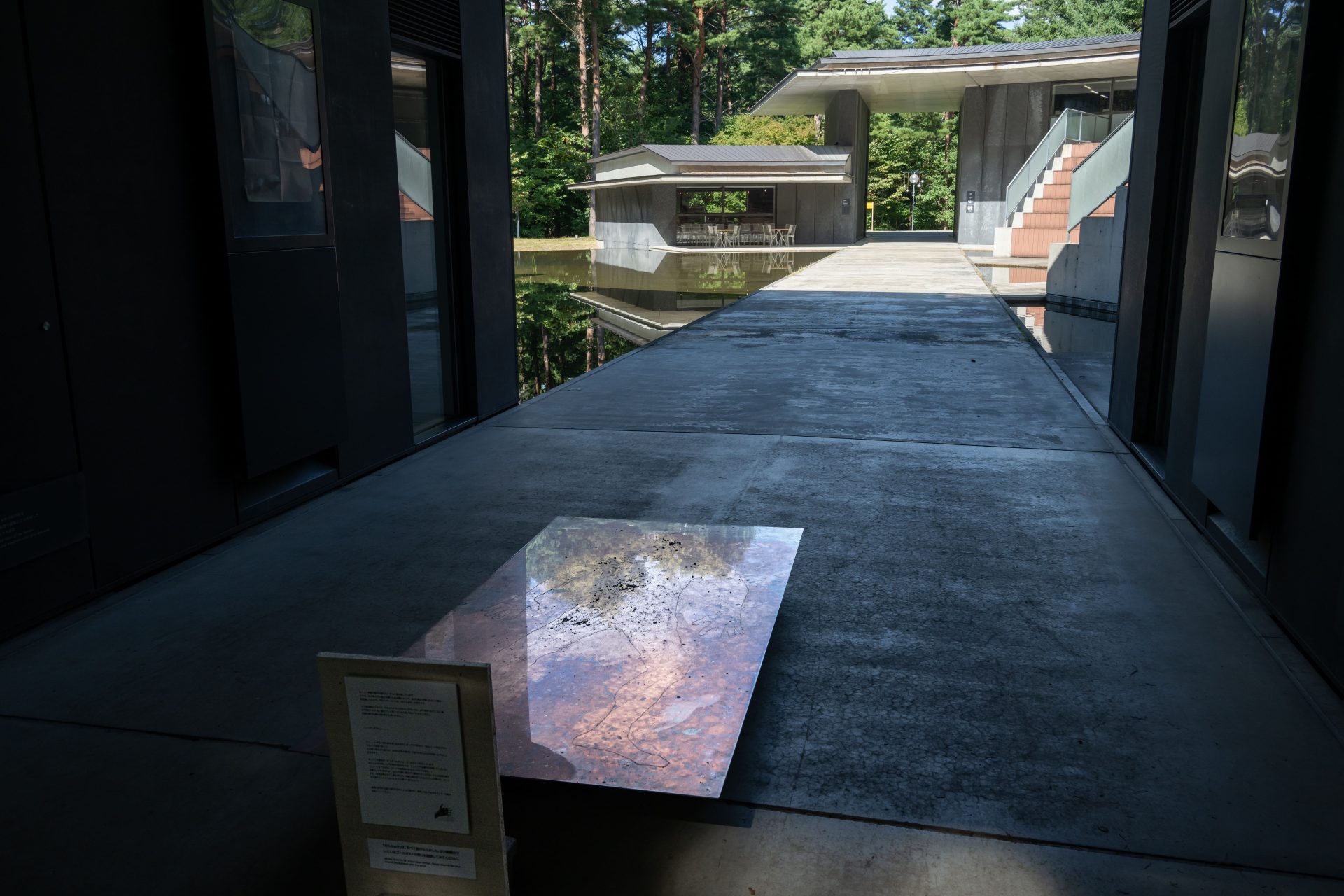
是恒の《双子鯨の夢を見たら》という作品は、鯨取り漁師たちに伝わる「子連れの鯨は夢にも見るな」という伝承とともに、それを反転した形で「鯨自身の夢」を造形化したようにも感じられた。興味深いことに、この会場の外にある光岡幸一による作品群の一つである「ししおどし」は、是恒の鯨が深い海流から時折水面に姿を現し、潮を吹いたり呼吸したりするような音響効果を発生させていた。光岡によれば、これはカップ麺の「湯切り」から着想した動力装置だという。二人の作家の間には、自然界では頻繁に見られる異種の協働にも似た見事な連携と創造性の連鎖が生じていた。さらに光岡が館内の天井からの雨漏りの音を増幅することで生み出す音響装置、野外の建築物等にテープで描き出されるピクトグラムは、室内で行われる作品制作を外部に裏返し、また野外で行われる土木的・遊戯的な活動をそのままアートワークに反転する会場設計のラディカルな側面を呈示するものだった。
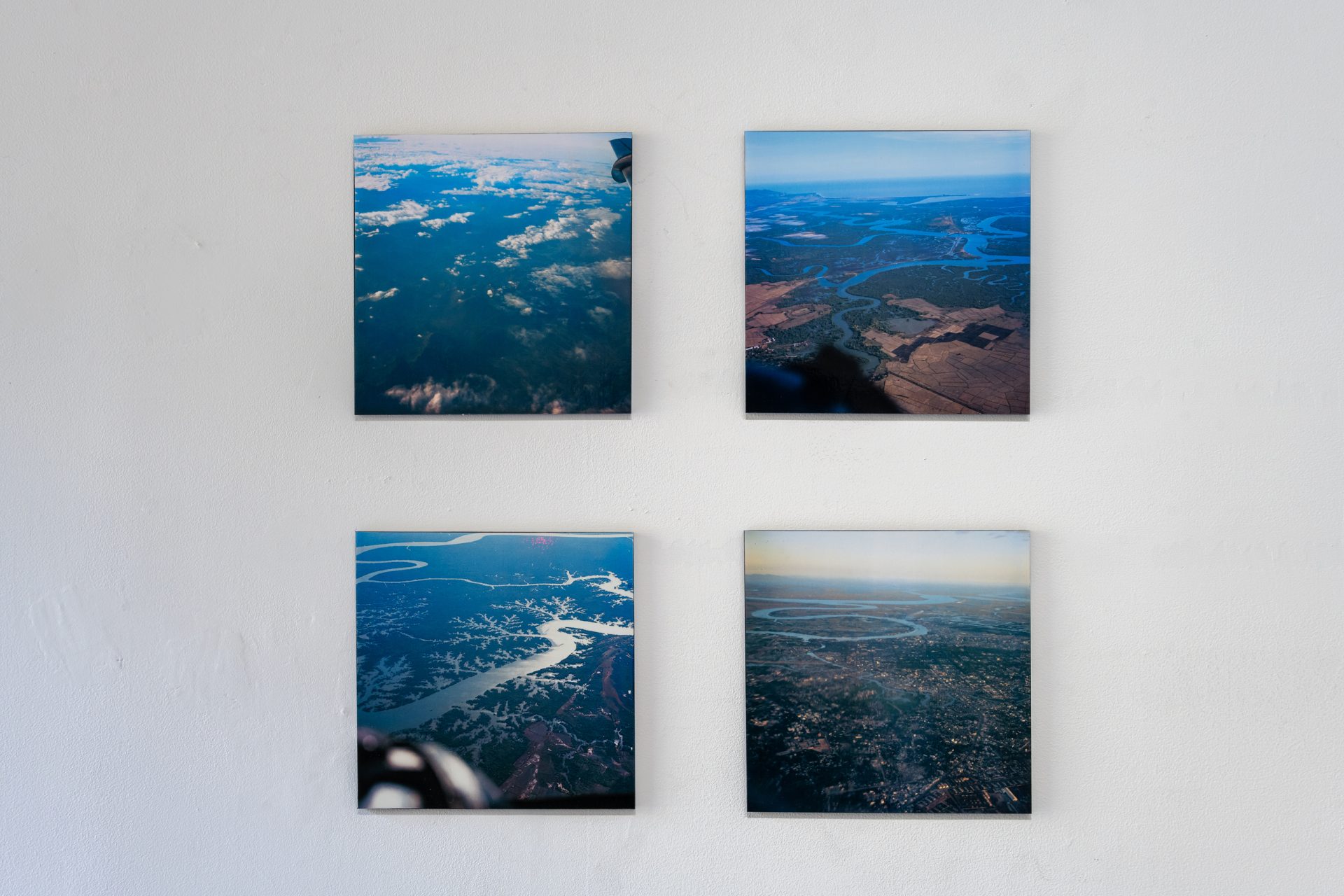
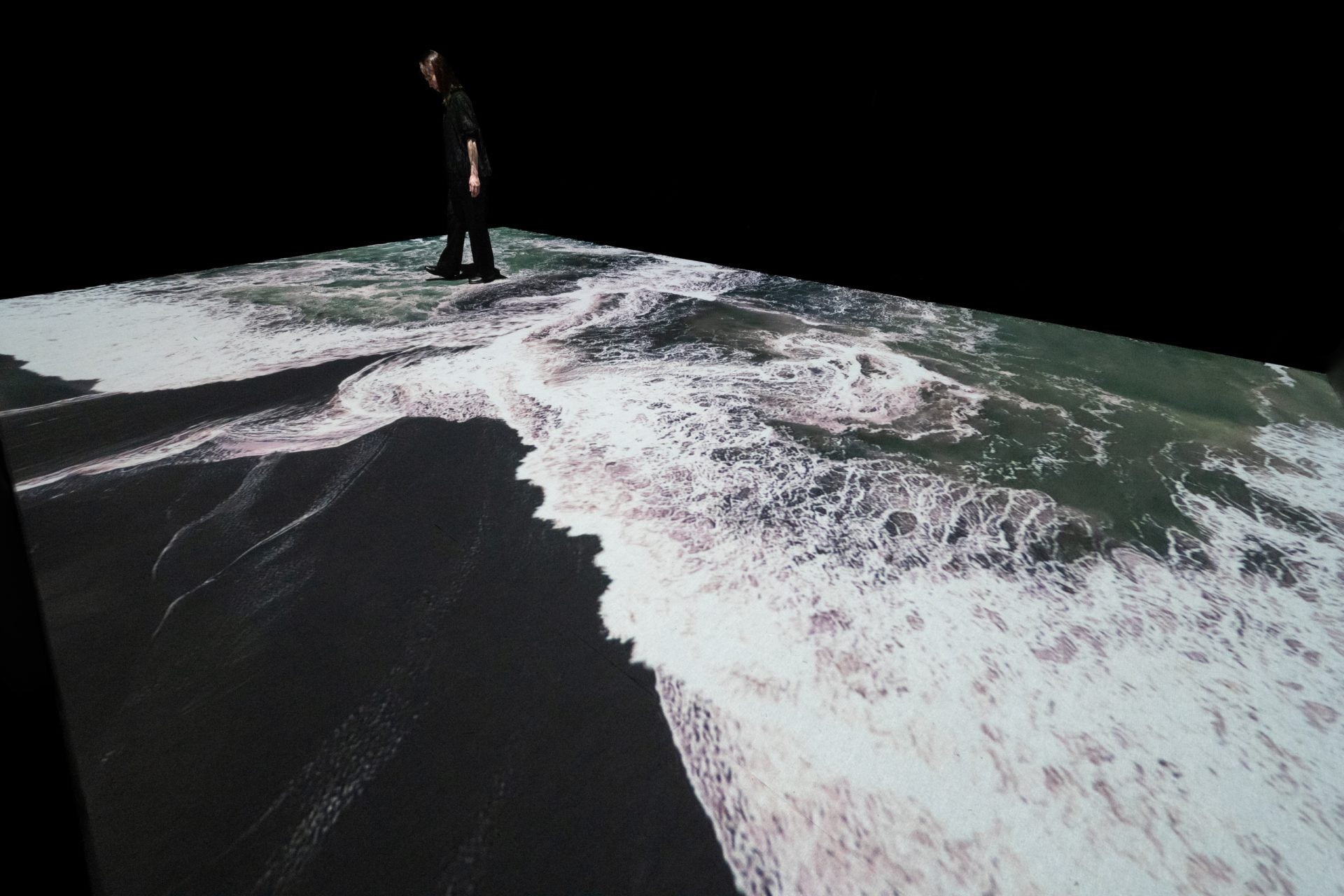
後期の展示では、前期には是恒による巨大な鯨の精霊が泳いでいたギャラリーBの空間に、岩根による壮大な水流の映像が映し出された。これは岩根が高校時代を過ごしたカリフォルニア北部を流れるマトール川の汽水域を撮影したものだという。八戸とほぼ同緯度にあるマトール川では、一年に一度川が海に決壊して、複雑な水流が交わり幾つもの渦を成す光景が展開されるという。これを内側から追体験できるように、岩根の映像は鑑賞者の主観的な視界を維持しつつ、身体から遊離した意識の流れを眺め続けるような不思議な臨場感を与えてくれた。その「不思議さ」は、ギャラリーAの奥に展示されている岩根の旅の写真に継承される。東京・福島・カリフォルニア・ハワイ・青森をたどる環太平洋の旅路を通して、岩根は逝去した人びとを追慕するだけではなく、複数の現実を以降する「体外離脱」の視点を鮮やかに技法化している。それは、カメラのレンズを用いた映像の実験であるだけでなく、古くから『チベットの死者の書』などの経典に記載されている、生と死の間にあるという「バルド(中有)」のプロセスを辿る意識の旅のようだ。
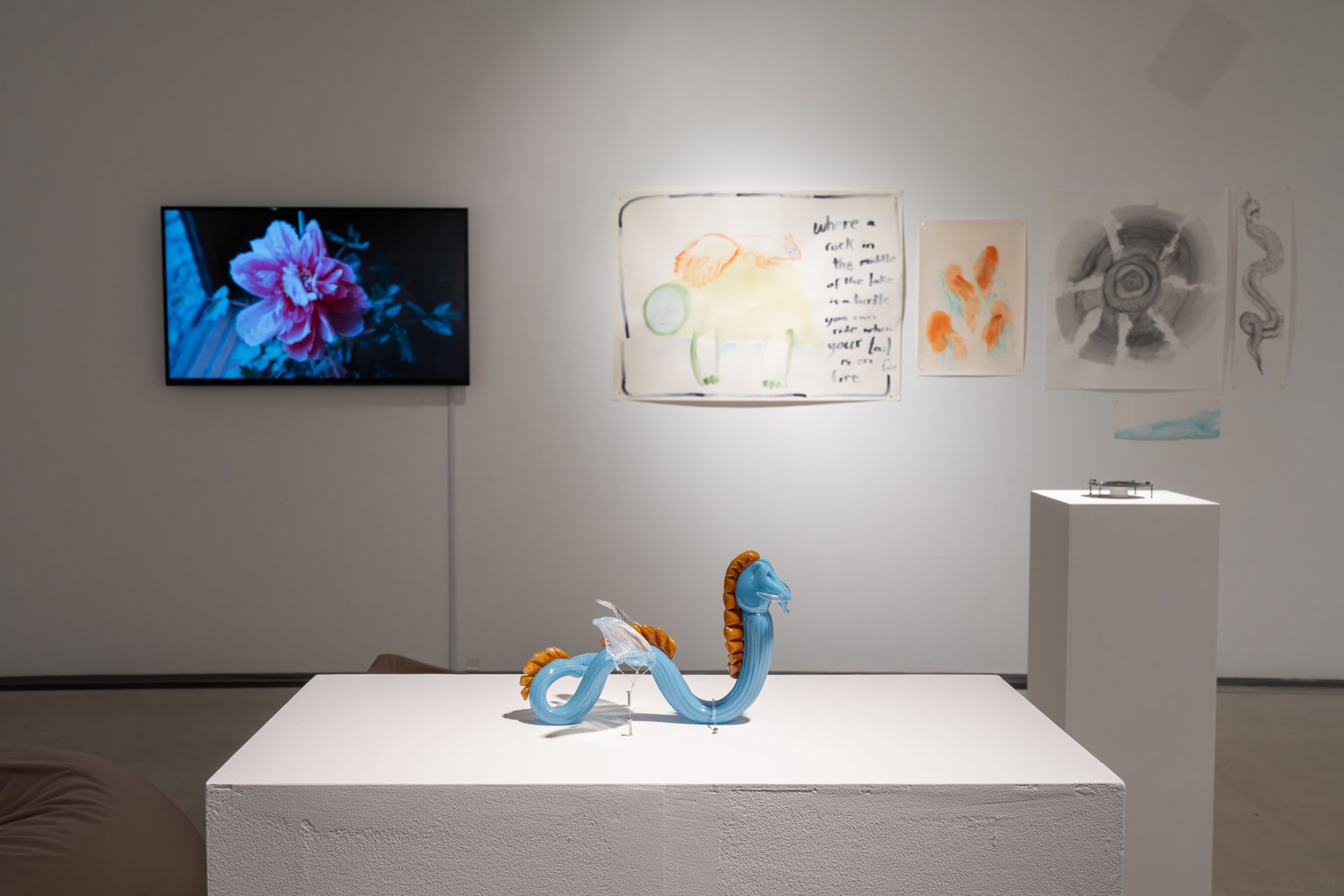
ギャラリーAでは、前期の展示を反復しながらもこれを深めるような工夫が随所に潜んでいた。例えばパレスチナ出身のアブードは、ドローイングやグラスウェア、映像を通じて、かつて緑豊かな土地であったヨルダン川渓谷を思わせる、青森の水に関わる様々な伝承を拾い集めていた。この試みは、ある土地が歴史の中で変化しうること、すなわち現在入植者の開発によって荒廃する故郷への返歌であり、パレスチナもまた、未来において豊かな水と緑を取り戻すことができるという希望でもある。この問いに呼応するように、後期には下北半島・函館・樺太など、日本列島の境界や国境を超えて収集されたアイヌの衣服が展示された。それらは、入植者植民地として北海道地域に囲い込まれたアイヌの人びとの生活文化を思い出させるが、それだけではない。展示されたアイヌの衣装は、かつて津軽半島や夏泊半島に「犾村(えぞむら)」と呼ばれるアイヌ集落があったことを想起させる。その豊かな衣服のデザインは、アイヌ民族を同化し、和人の政治と文化に組み込もうとしてきたという抑圧の歴史を超えて、実は東北における工芸デザインの源流がアイヌ文化のルーツと重なるものであるという歴史的現実を思い出させてくれる。
前後期を通じて、本展はそれぞれの作家の持つ表現回路と心的現実の多層性にアプローチすることに成功したと言えるだろう。振り返ってみると、こうした実験的な試みは、かつての芸術祭ブームにおいて氾濫した表層的なリサーチに根ざした「作品化」や「展示活動」を乗り越える成果と言えるかもしれない。だが、もっと重要なことがある。それは、おそらく長期間のリサーチの間に激しく揺れ動く現代の歴史から離脱し、自身の意識と身体の関係、生者と死者の関係、人間と非人間の関係といったさまざまな関係性について捉え直し、再帰的に自身の制作に活かすことのできる創作環境の可能性である。本展は大学キャンパスの一部に位置するACACの公益性を活かしつつ、このような環境特性をアーティストたちに共有し、複数の時間から同時代の芸術表現を汲み出すという重要な成果を残している。それは単に複数の異なる時間の流れを生きるだけではなく、加速化する時間に抵抗しつつ死者という非時間的な存在を想起し、その視点を自身の生の流れに組み込むことでもある。それはまた、生物進化の時間や地殻変動、火山活動、海流の変化といった長期持続する「人間ならざるものの時間」を想起し、人間の時間を相対化することにもつながる。
半年の期間をかけて二つの展示を接続するというこのプロジェクトは、忙しなく自身をマーケットに捧げ、死者の視点を忘れて生きようとする現代の生者(アーティスト、リサーチャー、鑑賞者、業界人)の在り方を、根底から批評する鋭さに貫かれている。その鋭さを包み込むのは、人間と人間ならざるものの膨大な死を見つめ、その死を想い、現存しない死者や精霊とともに生きようとするもう一つの時間のあり方かもしれない。死を想う時、私たちは自らが生きる同時代の時間の滞留に直面し、見知らぬ他者や亡者たちの生の時間と出会う。そして、それは物理的な死の可能性を超えて到来する想像力による再生の儀式であり、浮かんでは弾ける時間や複数種の身体を超えて「多元化する生命」に出会う軌跡でもあるのだろう。とてつもなく古い時代から受け継がれた盆踊りが移民の社会に甦りを果たすように、私たちは何度でも、新たな形式によって再生する多元的生命と出会い直すのだ。このプロジェクトは土地に潜む固有の時間と空間を超えた他者の時間を接続し、目の前に広がる荒漠とした死の力に抵抗する私たち自身の生の時間を目覚めさせる。私たちは死者とともに生き、この複数の流れの中で再生を果たすのだ。
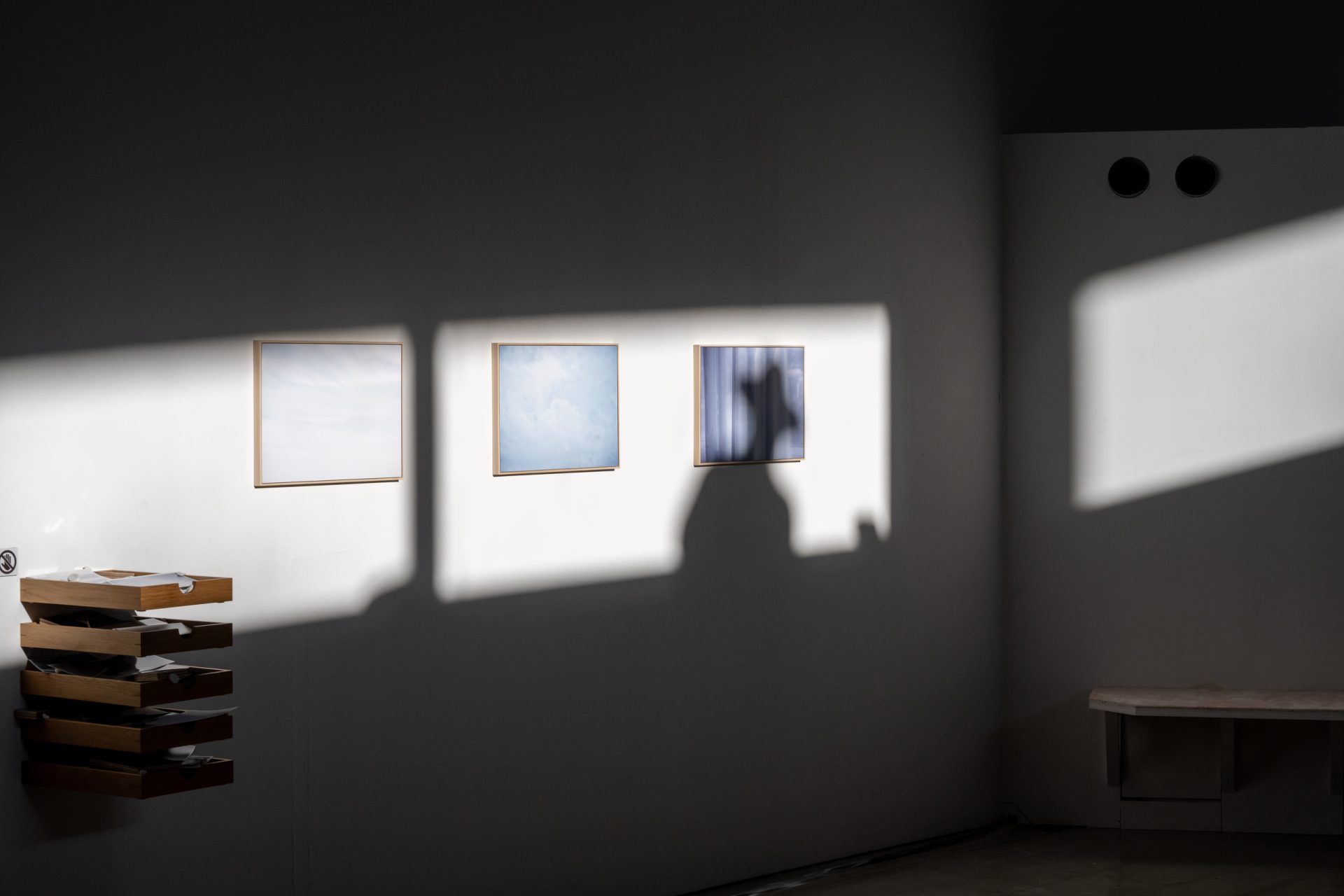
写真:百頭たけし
-
石倉 敏明ISHIKURA Toshiakimore
人類学者、秋田公立美術大学アーツ&ルーツ専攻教授。1974年東京生まれ。アジアや日本各地でフィールド調査を行い、アーティストとの共同制作を実施。複数種をめぐる神話学や芸術人類学研究を続ける。2019年、第58回ヴェネチア・ビエンナーレ国際芸術祭日本館展示「Cosmo-Eggs|宇宙の卵」に参加。共著書・共編著書に『野生めぐり列島神話の源流に触れる12の旅』、『Lexicon 現代人類学』、『モア・ザン・ヒューマン マルチスピーシーズ人類学と環境人文学』、『〈動物をえがく〉人類学 人はなぜ動物にひかれるのか』など。
Multiple Temporalities, Plural Lifeforms
On “currents / undercurrents ― Bringing together the endless flow”
To generate new forms of creativity, one must remain sensitive to the events of the present moment while also engaging in continuous inquiry into the creations and legacies of the past. Just as Johann Sebastian Bach transformed European folk melodies into groundbreaking polyphonic compositions, the contemporary musician Bob Dylan added his own lyrics to Scottish and American folk songs to make them his own. His 1964 composition “The Time They Are A-Changin’” can be seen as a brilliant musical achievement that captured both the surface-level shifts of the era and the deeper changes in sensibility and thought that stirred beneath.
In Japan in 2024, the year began with a series of shocking incidents: an earthquake in the Noto Peninsula, a plane collision at Haneda Airport, and a flood of subsequent breaking news. Internationally, the U.S. presidential election loomed, while the prolonged wars and invasions in Ukraine and Palestine continued to saturate our attention, to the point where it became difficult to remember what had happened only days before. The endless stream of information created a state of overload. Tiny bubbles that rise to the surface may, in fact, be signs of seismic shifts in the deep currents below. Even in Aomori’s local news, topics ranged from a new sumo champion to the closure of regional supermarket chains and long-established department stores. These stories―joyful or sorrowful―came and went. And yet, we live amid such updates while continuing to practice habits inherited from long ago. Until one day, even those habits evolve―giving rise to new, small whirlpools. Artists, too, live within these small, everyday vortices.
The AOMORI GOKAN Art Festival 2024, held across multiple sites within a single municipality, stood out as a fresh and ambitious experiment. Among its many programs, the one that left the deepest impression on me was the exhibition “currents / undercurrents” at Aomori Contemporary Art Centre (ACAC). Of course, ACAC has long been a site for distinctive exhibitions shaped by artists’ fieldwork and intensive residencies in Aomori. What made this season’s show particularly noteworthy was its structure: it was divided into two phases―a first and second period, each with a separate installation―effectively doubling the usual artist residency length. This allowed for a six-month research-based program enriched by workshops and public events. I was fortunate enough to see both phases of the exhibition. Across all of the works, I could feel a depth of investigation, a sharpness of emergence, and a richness of technique.
In the first half of the show, Gallery A opened with a striking dialogue between SUZUKI Masaharu’s Pacific Ocean series and a suite of woodblock prints by Robin WHITE, created during her time in Kiribati. Nearby, photographs by SAWADA Kyoichi, taken around Misawa Air Base and Lake Ogawara, formed a kind of atmospheric prelude. At first glance, Suzuki’s Pacific Ocean prints resemble non-historical mandalas, yet they evoke far-reaching themes: the history of human movement and communication across the Pacific, including the slave trade, the migrations of modern humans during the Paleolithic era, and even the geological history of the Earth―long before humanity existed. In resonance with Suzuki’s vision, Robin White’s work, which traverses New Zealand and Kiribati, depicts the invisible labor and unrecorded lives of women―those whom history has often overlooked. Best known as a conflict-zone photojournalist, Sawada here turns his gaze seaward from Aomori, capturing images that invite viewers to reflect not only on military presence, such as Japan’s Self-Defense Forces and U.S. military bases, but also on the geopolitical entanglements of the region.
As the exhibition unfolded, visitors were gradually led into a deepening constellation of works: photographs by IWANE Ai, documenting the aftermath of a devastating wildfire in Lahaina, Hawaii; delicate drawings and video works by Jumana Emil Abboud, echoing the fragments of ancient myths; a photographic series by NAKAJIMA Koji, revealing the rhythms of the body in confrontation with contemporary life; and designs and ceramics by KUDO Shoji, born in Aomori and a lifelong explorer of ancient cultural forms from East and West. This “walking journey” through the exhibition―a mosaic of works by both living and deceased artists, from global and local perspectives―ultimately brought viewers into the solemn space of AONO Fumiaki’s monumental installation. Aono’s work inevitably evokes the spiritual temporalities embedded in everyday objects as it engages with traditional beliefs concerning rites for the dead in Tohoku, notably those surrounding the Jizo statues at Kawakura Sainokawara, a temple in Goshogawara City. These temporalities in turn manifest as the work of a noble soul honoring the departed spirits of the countless victims of war and violence around the world, past and present. Even as this effort is torn apart by brutal realities and contradictions, any misery or cruelty is overcome by an indiscriminate compassion. It is in this context that Iwane, whose work in the central gallery touches on Bon festivals and the memory of the deceased among Fukushima’s diasporic communities in Hawaii, presents a series of photographs commemorating her late sister in the exhibition’s innermost space. The cherry blossoms in her images serve as a quiet, poignant response to Aono’s installation―an interweaving of personal mourning and collective remembrance.
In Gallery B, the work of KORETSUNE Sakura unfolded like the spirit of a giant whale swimming midair. Created by gathering and disassembling, fraying, layering, mending, and finally re-dyeing with indigo scraps of kimono collected across Aomori, Koretsune’s work incorporates the everyday labor of the hand. Her process brings forth an organically woven space, reminiscent of multi-species symbiosis, constructed through a self-organizing logic of collective making―where self and others are continuously entangled. Through this delicate craft, unspoken phrases emerge as poetic threads embedded in action. Koretsune’s fieldwork, which spans the Pacific Ocean, the Sea of Japan, and the Tsugaru Strait, reveals not only reverence for whales, but also collective memory―gratitude, fear, and awe―toward these immense creatures. Her approach does not follow the path of academic documentation, but rather reattaches us to the lived realities of local histories through forms of embodied knowledge.
Her piece titled If You Dream of Twin Whales can be read as a kind of counter-dream to the old whalers’ proverb: “Never dream of a whale with its calf.” It seems to give form to the dream of the whale itself―a reversal of perspective. Outside the gallery space, MITSUOKA Koichi’s shishi-odoshi (a water-powered sound device) echoed faintly, as if responding to Koretsune’s whale breaking the surface of a deep current to breathe or spout. According to Mitsuoka, the device was inspired by the act of draining water from instant cup noodles―a humble origin for a piece that resonates with natural rhythms. Between the two artists, an exquisite interplay emerged―resembling the kind of interspecies collaboration often seen in nature. Mitsuoka’s sound installation, which amplifies the sound of raindrops leaking from the ceiling, along with the pictograms drawn in tape across outdoor architectural elements, reversed the spatial order of the gallery: indoor creative processes were made to spill outward, while acts of construction and play outside became works of art in themselves. This radical inversion of space redefined the gallery as a site of porous boundaries―between inside and outside, human and nonhuman, artwork and act.
In the second half of the exhibition, the space of Gallery B, once home to Koretsune’s whale-spirit, was now filled with the vast water imagery of IWANE Ai. Her video captured the brackish zone of the Mattole River in Northern California, where she had spent her high school years. Located at a latitude similar to Hachinohe, this river breaks open into the ocean just once each year, giving rise to complex currents and whirlpools of intertwining flow. Projected from a subjective viewpoint, the video allowed the audience to relive this moment, creating a strange, immersive sensation―as if one’s consciousness had detached from the body, continuing to drift and observe from outside the self. That same sense of strangeness, or dissociation, was carried through to the photographs in Gallery A, documenting Iwane’s journey across Tokyo, Fukushima, California, Hawaii, and Aomori. Through this trans-Pacific passage, she not only mourned the dead but also developed a visual language that evokes the out-of-body perspective―a practice that draws from spiritual traditions such as the Bardo (intermediate state) described in texts like The Tibetan Book of the Dead.
Gallery A, while partly repeating elements of the earlier display, revealed new depths through subtle revisions. For example, Jumana Emil Abboud, a Palestinian artist, gathered various water-related legends and oral histories from Aomori, echoing memories of the once lush Jordan Valley, now devastated by settler colonial development. Her drawings, glassworks, and videos formed a quiet yet insistent response―a hopeful counter-song for a future in which Palestine might again reclaim its water and greenery. In dialogue with this, the second period also featured a display of Ainu garments collected from sites across Japan’s borderlands―Shimokita Peninsula, Hakodate, and Karafuto (Sakhalin). These artifacts remind us not only of the assimilation and suppression that Indigenous Ainu communities endured under settler colonial rule, but also of a deeper truth: that the roots of craft and design in Tohoku are intertwined with Ainu cultural heritage. The intricacy and richness of the clothing designs testify to a cultural vitality that transcends historical oppression and reclaims space within the narrative of regional identity.
Taken as a whole, the exhibition succeeded in engaging with the multiple layers of expression and psychic realities unique to each participating artist. In retrospect, this kind of experimental attempt may represent a step beyond the surface-level “research-based works” and “site-specific installations” that became ubiquitous during the earlier wave of art festivals in Japan. But more important than that is something else: this exhibition demonstrated the potential of a creative environment that allows artists to temporarily detach from the turbulence of contemporary history, and to reexamine their relationship with the body, with the living and the dead, with the human and more-than-human realms. As part of a university campus, ACAC’s public mission offered fertile ground for this kind of exploration. By supporting long-term residencies and research, it enabled artists to draw out contemporary artistic expressions from overlapping temporalities―not merely living in different times, but resisting the acceleration of time, and remembering the timeless presence of the dead. This remembering, in turn, made it possible to reintegrate those perspectives into the stream of one’s own life. The artists also invoked time on a geological scale―evolutionary time, tectonic time, volcanic and oceanic time―thereby decentering human temporality and placing it within a wider, nonhuman framework.
Spanning half a year and bridging two exhibitions, the project critically questioned the very stance of today’s living beings―artists, researchers, viewers, and industry professionals―who so often devote themselves to the market and forget the perspective of the dead. Yet this sharp critique was enveloped in something tender: a different sense of time―one that faces death, remembers the dead, and seeks to live alongside spirits and those no longer present. To think of death is to confront the stasis of one’s own time, and to encounter the lifetimes of strangers, of once-sainted ancestors, of those forgotten. And this, ultimately, becomes a ritual of regeneration―not merely a meditation on physical death, but a miracle made possible by imagination: a meeting with plural lifeforms that exist beyond singular bodies and linear time. Just as Bon Odori, handed down from ancient times, finds new life in the societies of the diaspora, we, too, encounter renewed forms of life―again and again―through new expressions and renewed rituals. This project connected the unique temporality of this land to the times of others beyond its borders. It awakened within us the vitality to resist the barren powers of death and to reclaim our own time of life. We live with the dead. And in these converging flows, we begin again.
Photo by HYAKUTOU Takeshi
-
ISHIKURA Toshiakimore
Anthropologist, Professor, Arts & Roots Course, Akita University of Art.Born in Tokyo in 1974. Ishikura collaborates with artists on creative projects based on field research he conducts throughout Japan and Asia. His research in mythology and art anthropology is concerned with themes of coexistence and symbiosis between human and non-human entities. In 2019, he participated in the “Cosmo-Eggs” exhibition at the Japan Pavilion of the 58th Venice Biennale International Art Exhibition. His co-authored and co-edited publications include: Yasei meguri: Retto shinwa no genryu ni fureru 12 no tabi [Wild Pilgrimage: 12 Voyages Tracing the Myths of the Japanese Islands]; Lexicon: Contemporary Anthropology; More-Than-Human: Multispecies Anthropology and Environmental Humanities; and jinruigaku: Hito wa naze dobutsu ni hikareru no ka [Anthropology (of drawing animals): Why are humans drawn to animals?].